Women’s cricket needs more Tests, multi-match series like men’s Ashes, says Sneh Rana

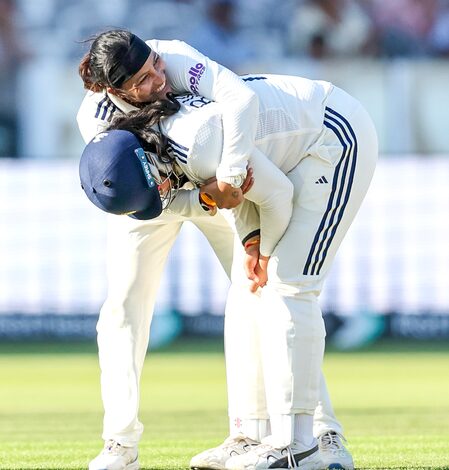
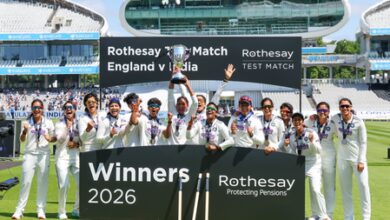
New Delhi, July 15 (IANS) Currently, the women’s international cricket calendar remains heavily skewed toward T20Is and ODIs due to commercial incentives. But riding high on India’s historic 270-run Test triumph over England at Lord’s, premier off-spin bowling all-rounder Sneh Rana has strongly advocated for more women’s Test matches to be played, citing how the men’s Ashes is a multi-game red-ball series, to help the format grow globally.
In an exclusive conversation with IANS, Sneh spoke about her preparation for the series, bowling plans in the match, post-game celebrations at Lord’s, having more red-ball women’s cricket, and more. Excerpts:-
Q. How was your preparation for the historic Test match after landing in England?
A. When I joined the team for the first time and when we went for the first practice session, so yes, we were playing with Dukes for the first time. I myself experienced that ball for the first time, and it felt a little heavy, and I could feel its seam. At Lord’s, the ball tends to bounce a lot.
So, later, when we had 2-3 practice sessions, I got to know about the grip and how firmly you have to hold it. So, I did all those things in practice. Finally, when I practised at Lord’s, I saw how the pitch was, how the red ball would behave. I figured all that and thought we could get a little turn at Lord’s – so that was a plus point.
Q. Can you talk us through how you consciously adjusted to the conditions to get that extra bounce and turn?
A. The endeavour was that the more revolutions you put on the ball, the more fingers you put on the ball, the more turns you would get. You had to put effort into every ball because whatever ball we release from above, which is called topspin, you had to put your finger on it, too.
If we were letting go of the ball like this, then it was coming off the bat easily, too. So, I mean, it was a batting-friendly pitch, and it was also good for bowling. So, that’s it – we had to put a little extra effort into the Duke’s ball. But eventually, the result came in our favour. So, that’s a good thing.
Q. That dismissal of Nat Sciver-Brunt and then finally of Sophie Ecclestone in the second innings – what was the planning behind it?
A. Yes, the planning was very simple in the Test match. I don’t do a lot of experiments, and I focus on my line and length only. I believe in myself because the more patiently you bowl in the Test match, the more success you will get. So, the plan was very simple. An lbw, yes, it was left to her. But the second ball was also as per the same plan – that she had to play a drive. But she went for a sweep, and I got that bat and pad gap, and maybe that’s why the result was in my favour.
See, obviously it was the revs because before that, I was making her (Ecclestone) play on the up. So, she was hitting drives easily. But I delivered that ball a little behind. So, maybe she made a little mistake in reading the length, and again, it became a bat and pad gap because I was getting a very good turn there, too. There were a lot of balls that could have gone between the bat and the pad. It hit the pad while I got a couple of wickets just like that.
Q. Talk a bit about the post-game celebrations because Tendulkar sir was shaking hands with everyone, and after lifting the trophy, you went towards the fans. What did it feel like?
A. Yes, when we won the match, Sachin sir, Jay Shah sir, Devajit Saikia sir, everyone was standing outside, and they came to give us their wishes. After meeting them, we went to the fans because one is nothing without their support, and they came in huge numbers to support us. It didn’t feel like a test match was going on.
They were chanting a lot and motivated us so much. Because it is a very long format, you sometimes get tired of standing inside. You don’t understand what is going on and what is not clicking because it is a very long format. But they were boosting and motivating us so much. They were telling us so nicely Come on, India.’ So, they were giving us different chants, and it was very nice to hear.
That’s why we went to them and said thank you to them. Fans have a different space in an athlete’s life because we are nothing without them. If there is their support, then maybe women’s cricket will go further. It was a very happy thing that so many people came to see the Test match. I think the highest attendance at Lord’s was 37,000-plus (37,846 fans, also a new world record for women’s Test attendance) for a Test match, and I think this is a very big victory for women’s cricket.
Q. There used to be a time when female spectators were not allowed to join the MCC or be at the Lord’s pavilion till 1999. Now that this first-ever Women’s Test has happened, how significant has this moment been from a cultural perspective?
A. See, this match is a really big victory because the former cricketers of England, who also came there, were also given the Guard of Honour before the match started, and it was very nice to see. Earlier, when there was an entry ban for women, in that long room, where people yearn to sit and watch, women were not even allowed to come there.
Today, every woman athlete comes from there to the field, and everyone claps for them. So, I think there is nothing bigger than this. It is also a very emotional moment when you stand on that balcony and when you walk from that long room to the field. It is a very special feeling. I think it is a very big victory for women’s cricket and for England cricket as well, for what they have done. Maybe their former cricketers must have struggled a lot at that time, and today, we are getting a chance to play there. So, thanks to them also.
Q. A word on acknowledging the past legends of Indian cricket who have paved the way for this big moment to become a reality?
A. Absolutely, we should acknowledge them because they are the people who have laid the foundation, and they have seen that struggle. Maybe because of them, athletes like us have been able to play here now.
It is very important to give them that recognition because at that time, there were not so many facilities and not so much media coverage. So, no one knows who has done what. But finally, today, when we see them on the ground or see their stats, we feel very proud.
Q. How deeply do you feel this specific Lord’s Test will shift the needle in organising more women’s Test matches globally?
A. I always say this – that more Test matches should be there for women’s cricket because it is a very good format. Test matches only test you as an athlete, and it is a special format. It is fun to play in the whites.
Like the men’s Ashes series, there are five Test matches – so, I feel, in the future, it should be done for women’s cricket too, as soon as possible. It is good for us too, as we will also play a series. But it should be done for Test matches.
Q. Right now, women’s Test cricket is still restricted to rare, one-off matches, with the calendar heavily favouring T20s and ODIs. Given the financial incentives tied to shorter formats, how can a young girl growing up today practically harbour the ambition of becoming a great Test cricketer? What would you tell her?
A. The more they watch Test cricket, and the more updates they take on it, maybe their interest will increase. Like BCCI took a very good step – they brought back three-day cricket in the domestic circuit. So that is a very good step because the experience you will get from there to play days cricket, maybe it will be used here because it is a very long format, and for that you need a lot of endurance and patience when you play at that level.
You will get experience in handling and playing a four-day Test match in phases. The more Test matches you play, the more experience you will get from playing them. So all the youngsters who are coming and who think that we want to play Test cricket, maybe for them too, it will become a ladder to be a part of it.
Q. There’s been a notion that many Indian players having prior red-ball playing experience have been helpful in the victory at Lord’s. What’s your take on it?
A. See, it makes a difference. When you play days of cricket, and how your body adapts to the situation, it helps. A Test match has always been a game of phases, and you can go for batting anytime, as you have to bat for a long time. You also have to do continuous overs. So your mind gets ready accordingly.
Also, BCCI has brought red-ball cricket back for women, and that was a very good step. There is also this advantage because we also know what to do in which phase. If you have to take out wickets, then how can you take them out patiently – how can you put the same ball again and again at the same place? So for tuning into it mentally, you become strong anyway – that patience you are putting into the same ball in the same area. So that patience is taught by Test cricket, and it helps somewhere.
Q. With your performance in this Test (four wickets in the second innings, six in the match), you now have four four-wicket hauls in just 10 Test innings – putting you on par with Neetu David and trailing only Shubhangi Kulkarni and Jhulan Goswami in Indian women’s Test history. What is it about red-ball cricket that brings out the absolute best in you?
A. I always say this – Test cricket has always been my favourite format because I have a lot of patience. So I patiently keep putting the ball in the same place, and the batter keeps getting frustrated. I keep putting my line and length right, my top spin, and those revolutions, and I just focus on that.
Like, T20 is a very fast game. So you have to think about every ball, and you have to adapt. But in Test cricket, you can do the same thing again and again. You can make your mind understand it because there is patience, and I have played so much red-ball cricket in the domestic circuit.
So there is experience, and I think it helps somewhere. It feels good to play Test cricket. When you are talking about performances, I think it happens with practice. There is not much in it. It is also God’s grace that I get wickets.
–IANS
nr/bsk/