
Vikram Bhatt on India sticking with neutrality amidst global uncertainity: ‘Sign of mature democracy’

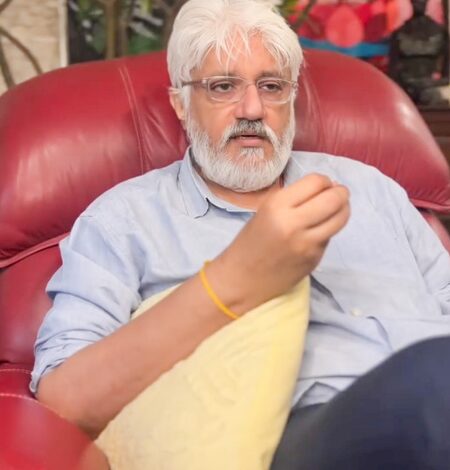
Mumbai, June 24 (IANS) Filmmaker Vikram Bhatt, who is receiving a lot of positive response for his recently released film ‘Haunted 3D’, has lauded the government for sticking by the nation’s principle of staying neutral in the face of rising global conflicts.
The director spoke with IANS during the promotions of his film, and said that India has managed to stay autonomous when it comes to its foreign policy.
He told IANS, “When most of the countries have chosen one side or the other, our government has been able to stay neutral. And I think neutrality takes a lot of courage because there is never pressure from the person who is on the weaker side. But there is always a lot of pressure from the bigger power to take their line of understanding of communication. Our government has not done that”.
He further mentioned, “We haven’t told anyone, ‘You are wrong or he is right’. We have condemned wrongdoings regardless of the country and we have appreciated the right ones regardless of the country. And I think that’s a very rare sign of a mature democracy that doesn’t feel the need for alignment for survival”.
India’s policy of non-alignment emerged during the Cold War as a strategy to avoid being drawn into the rival blocs led by the United States and the Soviet Union. Nehru, along with other leaders helped shape the Non-Aligned Movement, formally established in 1961.
The policy reflected India’s anti-colonial outlook, desire for peace, and focus on development. Critics have argued it sometimes became idealistic, especially during security crises like the 1962 war with China.
India, which was once the leader of the non-alignment movement, shifted its foreign policy from non-alignment owing to its economic liberalization in the 1990s, and growing integration into the global economy. The nation now operates on multi-alignment or strategic autonomy prioritizing issue-based partnerships with major powers like the U.S. and Russia.
–IANS
aa/