

Washington, June 3 (IANS) US senators from both parties raised concerns about the impact of a $100,000 H-1B visa fee on rural hospitals, pressing Homeland Security Secretary Markwayne Mullin to consider relief for foreign doctors recruited to underserved communities.
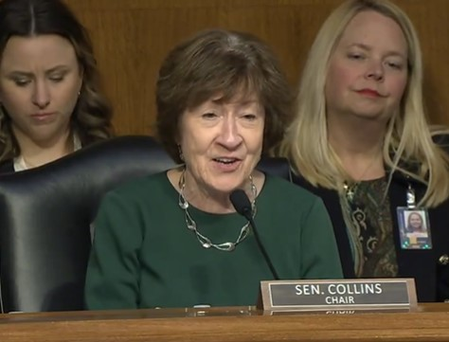
During a Senate Appropriations Subcommittee hearing on the Department of Homeland Security’s fiscal year 2027 budget request, Senator Susan Collins of Maine raised the issue of difficulties that the rural healthcare providers face in attracting specialised medical professionals.
Collins told the hearing that a hospital in Presque Isle, a rural community in northern Maine, recently had to pay the fee to secure a much-needed surgeon from overseas. She argued that medical providers serving remote areas should be treated differently from employers recruiting highly skilled workers in sectors with larger domestic labour pools.
“Would you be willing to consider carving out an exemption for medical professionals from this fee when a community can demonstrate that there is not a medical professional available?” Collins asked.
Mullin acknowledged the challenge and said the department was willing to examine possible solutions, although he cautioned that creating a broad exemption could prove difficult under existing rules.
“We do have some authority and flexibility to be able to waive some of this on a case by case,” Mullin said.
The Homeland Security Secretary said DHS had received about 286,000 H-1B applications so far in fiscal year 2026. According to Mullin, more than 200,000 applicants opted to pay the $100,000 fee because it allows applications to be processed more quickly.
“In fact, when we do that, we’re able to process them in about 15 days,” he said, adding that applicants seeking exemptions or alternative pathways often face waits of around seven and a half months.
Mullin said the department would be willing to work with lawmakers on possible changes.
“We’re happy to look into it, look at language, try to get it better, because I agree. From a very rural area, I understand how hard it is to get doctors,” he said.
Collins argued that healthcare staffing shortages present a different challenge from workforce needs in technology hubs.
“I would suggest that there’s a huge difference between bringing in a computer expert from another country to work in wealthy California and Silicon Valley versus a much needed surgeon to work at a rural hospital in northern Maine,” she said.
The discussion later broadened to other employment-based visa programmes. Collins also urged DHS to explore reforms to the H-2B seasonal worker visa system, including possible exemptions for returning workers and employers with strong compliance records. Mullin said he was open to streamlining the process but noted that some changes would require congressional action.
–IANS
lkj/rs