
Sharp rise in funds for rural and tribal areas fuelling inclusive growth: Govt

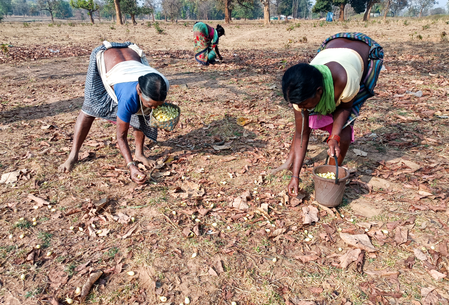
New Delhi, Aug 13 (IANS) The Centre’s thrust on inclusive development is being implemented with a sharp increase in budgetary outlays for rural and tribal communities to improve the quality of life at the grassroots level through better basic services, resilient infrastructure, skills, education, and financial security, according to a factsheet issued by the government on Thursday.
Direct fiscal transfers to gram panchayats have nearly doubled from Rs 2.36 lakh crore under the 15th Finance Commission (2021–26) to Rs 4.35 lakh crore under the 16th Finance Commission (2026–31) while the Union Budget for rural development has seen a three-fold jump from Rs 87,765 crore (2016–17) to Rs 2.73 lakh crore (2026–27).
Similarly, the allocation for tribal affairs in the Union Budget has surged more than three times from Rs 4,826 crore (2016–17) to Rs 15,421.97 crore (2026–27), the factsheet states.
It highlights that focused efforts for women, tribal communities, and vulnerable groups are further strengthening pathways to dignity and empowerment. These initiatives are reshaping rural India through wider opportunity, stronger communities and more equitable development.
The government has accorded high priority to providing universal access to basic needs through schemes such as the Jal Jeevan Mission. Household tap water coverage increased from 3.23 crore in August 2019 to over 15.91 crore (as on August 12, 2026).
As many as 2.89 lakh villages have reported 100 per cent tap water coverage under the ‘Har Ghar Jal’ campaign. Besides, 100 per cent village electrification was achieved by 2025 under the Deendayal Upadhyaya Gram Jyoti Yojana.
As part of the Swachh Bharat Abhiyan–Grameen, over 12.19 crore individual household toilets have been constructed (as on August 12). India was declared Open Defecation Free (ODF) in 2019.
There has also been rapid progress in the development of the girl child. Under the Beti Bachao Beti Padhao, the enrolment ratio for girls at the Class 9-10 level has risen from 75.5 per cent in 2014–15 to 83.4 per cent in 2025–26. The school drop-out rate for girls has also shown a sharp decline.
Under PMAY-G, over 3.91 crore brick and mortar houses have been sanctioned for the rural poor, and 3.13 crore houses have been completed (as on August 12), leading to an improvement in the standard of living.
Free foodgrains, LPG connections and health insurance for the poor are other areas where significant progress has been made improving the living conditions of the poor, the factsheet observes.
–IANS
sps/na