PM Modi sets ambitious roadmap for Viksit Bharat; calls for manufacturing, defence, tech push

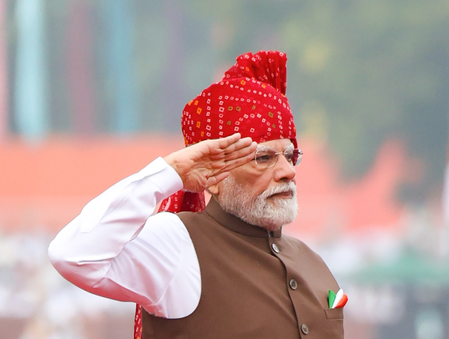
New Delhi, Aug 15 (IANS) Prime Minister Narendra Modi’s Independence Day address on Saturday featured a series of futuristic calls aimed at defining the scale and direction of India’s ambitions for the coming decades.
From expanding manufacturing and building self-reliance in defence to establishing leadership in technology, green growth and India’s soft power, the Prime Minister, during his Independence Day speech from the ramparts of the Red Fort, laid out a broad roadmap for the country’s next phase of development.
At the heart of his address was the concept of ‘Sapta Dhara’ or ‘Sapt Shakti’ — seven streams of strength that, according to the Prime Minister, can power India’s growth and help the country move towards the goal of Viksit Bharat.
The first stream is Manufacturing Power, with the Prime Minister calling for the creation of complete domestic, end-to-end value chains covering everything from design and components to finished products.
He emphasised the need to focus on cost competitiveness, global scale and zero-defect manufacturing, while urging Indian manufacturers to make quality the defining identity of their products.
The second stream is Agriculture and Food Processing. The Prime Minister called for integrated supply chains connecting farms to global export markets, with greater emphasis on products such as millets, spices and fruits.
He also highlighted the need to move towards chemical-free farming while creating greater value for farmers through food processing and exports.
Technology and Innovation formed the third stream of Sapta Dhara. PM Modi called for India to move beyond being merely a technology market and establish itself as a global innovation hub.
He highlighted emerging areas including Artificial Intelligence, Quantum technology, Space, Robotics, Digital Public Infrastructure and Made-in-India 6G as key areas in which India should seek global leadership.
The fourth stream is Gati Shakti, which focusses on building seamless and high-speed connectivity across the country. The Prime Minister outlined the need to integrate highways, railways, airports, cities and modern industrial sea ports through multimodal logistics networks, thereby improving connectivity and strengthening India’s manufacturing and trade capabilities.
Raksha Shakti constitutes the fifth stream of the roadmap. PM Modi called for complete strategic self-reliance in defence and said India should not only develop advanced defence technologies but also emerge as a global supplier.
He specifically highlighted drones, counter-drone systems and hypersonic technologies as areas where India should seek leadership and build export capabilities.
The sixth stream is the Green and Blue Economy, with the Prime Minister stressing the need to expand sustainable growth through Green Hydrogen, renewable energy and energy storage.
At the same time, he underlined the vast potential of India’s oceans and coastline, including opportunities in fisheries, coastal tourism and marine technologies, calling for greater utilisation of the country’s blue economy.
India’s Soft Power is the seventh stream of Sapta Dhara. PM Modi called for Indian culture, Yoga, Ayurveda and tourism to be taken to a wider global audience while highlighting the potential for India to become a world leader in gaming, visual effects, animation and the broader creative economy.
Alongside the seven streams, the Prime Minister issued a direct call for an uncompromising focus on quality. He said Indian products must earn global trust through exceptional standards and urged industry to ensure that quality becomes central to India’s global economic identity.
PM Modi also sought to redefine the scale of India’s economic ambitions, calling for Indian companies and institutions to achieve positions of global prominence. He envisioned 50 Indian companies entering the Fortune 500, an Indian bank becoming one of the world’s leading banks, and an Indian pharmaceutical company entering the global top five.
He also spoke of an Indian law or rating agency achieving global leadership, an Indian consulting or accounting firm becoming one of the world’s leading firms, and an Indian technology company emerging among the world’s top companies.
The Prime Minister further called for the creation of globally recognised Indian brands, saying the ultimate ambition should be to build brands whose names generate enthusiasm and recognition across the world when people hear the word India.
In another major appeal, PM Modi highlighted the Nasha Mukt Yuva Abhiyan and urged families across the country to actively participate in the campaign against drug abuse.
He stressed that the menace of drugs is harming society and called for collective participation to ensure that India’s youth remain free from addiction.
The Prime Minister also spoke about the country’s first Digital Census, which is currently underway. He urged every family to sit together and provide accurate information while filling in the details of their household. He said citizens’ cooperation in supplying correct information would help the government in better policy-making and planning for the future.
Emphasising cooperative federalism and reforms, PM Modi called for governments at the Centre and in the states to come together to take the country towards the next level of development and reform. He stressed that the vision of Viksit Bharat requires both cooperative federalism and a whole-of-government and whole-of-society approach.
Prime Minister Modi also made a strong appeal to all political parties to come together and extend their support to the Nari Shakti Vandan Adhiniyam, stressing the need to ensure greater representation for women in politics and enable them to play a larger role in shaping the country’s policies.
He highlighted the growing participation of women in grassroots governance and said their leadership in Panchayats, Municipalities and Municipal Corporations has demonstrated their ability to address local challenges and provide effective leadership.
He recalled that Parliament had passed the Nari Shakti Vandan Adhiniyam to provide greater political representation to women, but said the issue had remained entangled in political disagreements for decades.
Making a direct appeal to political parties from the Red Fort, the Prime Minister urged them to rise above political differences and work towards ensuring that women receive their due share of representation in state legislatures and the Lok Sabha.
–IANS
sd/rad