
Pakistani Major-General who trained 26/11 perpetrators remains in the shadows

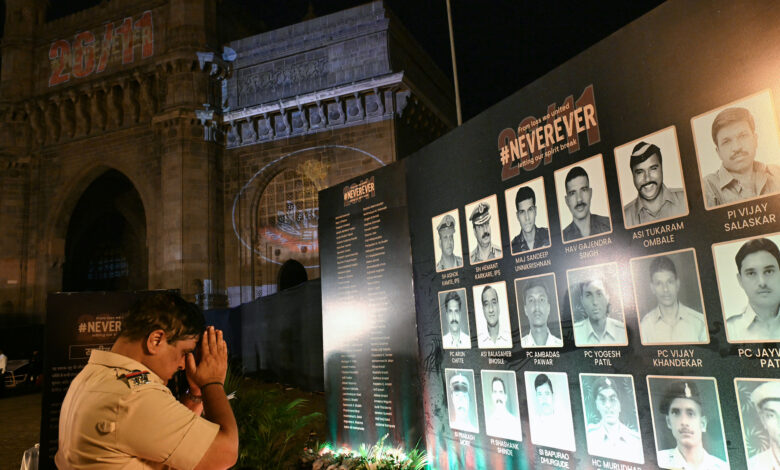
New Delhi, Nov 26 (IANS) Eighteen years after the 26/11 Mumbai terror attacks, one of the most intriguing questions that remains unanswered is the identity of a shadowy Pakistani military officer recalled by apprehended perpetrators only as “Major-General Sahab”.
Even after extensive investigations, court hearings, and confessions from key figures connected to the attacks, the real identity of the man described by terrorist Ajmal Kasab and reconnaissance operative David Headley remains elusive.
The apparently powerful army officer has never been conclusively identified despite the efforts of investigators. The November 2008 attacks had left 166 people dead and over 300 injured after 10 Lashkar-e-Taiba (LeT) gunmen launched coordinated assaults across multiple locations in Mumbai, including the Taj Mahal Palace Hotel, Oberoi-Trident, Chhatrapati Shivaji Terminus, and Nariman House.
The terrorists resorted to indiscriminate firing, throwing grenades, and attacking civilians till nine of them were eliminated and Kasab was apprehended.
Kasab later provided investigators with detailed accounts of the training and preparation that preceded the attack. While narrating details of the exercise, he reportedly mentioned a mysterious senior Pakistani officer whom recruits and trainers referred to simply as “Major-General Sahab”.
According to his statements, the officer regularly visited LeT training camps near Muzaffarabad in Pakistan-occupied Kashmir. He was treated with unusual deference by both terror leaders as well as military trainers. Kasab recalled that LeT chief Hafiz Saeed and operational commander Zaki-ur-Rehman Lakhvi greeted the officer warmly and that he personally supervised parts of the terrorist training.
Certain episodes described by Kasab have become symbolic of the phantom figure’s long shadow over the training.
During a firing exercise, the “Major General” reportedly inspected targets hit by the trainees and praised Kasab’s shooting skill. Incidentally, the officer is said to have revisited them to evaluate their readiness and motivation before being set on the waters of the Arabian Sea to infiltrate the coastline.
Investigators have not been able to determine the name of this shadowy, yet apparently influential player. The Mumbai Police chargesheet listed the officer as “Accused No. 20: Major General Sahab, name unknown”.
Remarkably, he remains the only one among the 32 Pakistani suspects associated with the case whose identity has not been established. There is no publicly known photograph, sketch, or confirmed biographical information about him.
In his statements to Indian investigators, Headley, the Pakistani-American operative who had earlier conducted reconnaissance of possible targets, also described extensive links between LeT, Pakistan’s spy agency Inter-Services Intelligence (ISI), and serving military officers.
He named several officials, including Major General Muhammad Khalid Rao, Colonel Sadatullah, Major Iqbal, and Lieutenant Colonel Hamza, as figures connected to the terror strike. However, even Headley’s disclosures did not definitively reveal the identity of the “Major-General Sahab”.
Probe officials and analysts had suspected that the officer may have been associated with the ISI’s covert operations apparatus, often referred to as “Directorate S”.
The unit has often been linked to the management of proxy militant organisations and clandestine operations overseas. Also, Directorate S has often been led by officers holding the rank of Major General, thus leading to the premise of the phantom figure’s apparent position in the hideous operation.
Though later reporting included two former Pakistani officers, Major General Asif Akhtar and Lieutenant General Nadeem Taj, both of whom held senior intelligence roles around the period leading to the attacks, no public evidence has conclusively tied either to the identity of the elusive “Major-General Sahab”.
While Kasab was tried and executed in India, many of those behind the planning, propping up, or supervising the operation from Pakistan remain beyond the reach of Indian courts, with Islamabad refusing to cooperate.
With Pakistan’s cloak of cover around him, the identity of “Accused No. 20” has become a symbol of an unfinished pursuit of accountability.
–IANS
jb/dan