Pakistan: Economists, civil society activists slam 2026-27 ‘austerity’ budget

Islamabad, June 24 (IANS) Several Pakistani economists and civil society groups criticised the country’s 2026-27 “austerity” budget, stating that it systematically undermined low-income household welfare, labour protections, and gender equality.
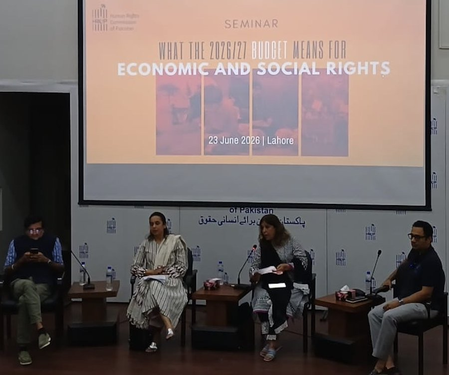
At a seminar hosted by the Human Rights Commission of Pakistan (HRCP) on Tuesday, participants said that the “economic stabilisation” being touted by the Pakistani government was being achieved at the “cost of citizens’ survival and social justice.”
According to the HRCP, the participants included civil society organisations and networks, including South Asia Partnership – Pakistan, Simorgh, the Women’s Action Forum, the Aurat Foundation, and Joint Action Committee, as well as several labour federations and trade unions across the country.
Addressing the seminar, Pakistani economist Fahd Ali said that lower public spending on education, health, social protection, and nutrition would “deepen existing inequalities” in the country.
At the household level, he argued, changing consumption patterns and declining nutritional quality reflected growing “economic distress.”
Another economist, Hadia Majid, said that the “budget’s gender commitments appeared largely rhetorical, with responsibility for education, health and protection having been shifted almost deviously to the fiscally constrained provinces.”
“The tax relief measures announced were also unlikely to benefit most women, given low female participation in formal employment. Despite persistently poor outcomes in maternal health, child survival and girls’ education, the budget had failed to address the structural barriers limiting women’s economic participation,” the HRCP quoted Majid as saying.
Additionally, Labour leader and All Pakistan Trade Union Federation (APTUF) secretary general Rubina Jamil criticised the budget as prioritising expenditure that did little to address the needs of working people while offering limited protections for those most vulnerable to economic insecurity.
“Developed without meaningful consultation with workers’ representatives”, she said that it lacked targeted measures for contract workers, domestic and home-based workers, workers in hazardous sectors, garment workers, agricultural workers, and pensioners.”
The burden of economic adjustment, she argued, fell disproportionately on those least able to absorb it, thereby reinforcing perceptions that the budget favoured economic elites over workers.
Furthermore, another Pakistani economist, Aqdas Afzal, warned that “continued reliance on indirect taxation, limited expansion of the tax base and fiscal consolidation amid rising hardship have placed disproportionate pressure on low-income households and salaried workers.”
He added that social protection remained “insufficient and unevenly targeted”, with serious implications for households below the poverty line across Pakistan.
–IANS
scor/rs