NITRD sets benchmark for hospital waste management; achieves ‘Zero Waste to Landfill’ status

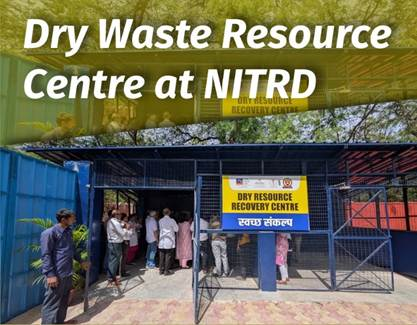
New Delhi, April 22 (IANS) The National Institute of Tuberculosis and Respiratory Diseases (NITRD) in Delhi has been officially recognised as Zero Waste to Landfill becoming a benchmark for responsible and environmentally conscious waste management in India’s healthcare sector, the government said on Wednesday.
The achievement came after a campus‑wide waste management overhaul, executed by the Why Waste Wednesdays Foundation under its Swachh Sankalp programme.
The initiative proved structured planning and collective action can drive meaningful change, the statement from the Ministry of Housing & Urban Affairs said.
The healthcare institution with 27‑acre campus achieved full compliance in the Bulk Waste Generator category under the 2026 Solid Waste Management Guidelines, by successfully managing about 1 to 1.2 tons of waste generated daily, including 500–650 kilograms of wet waste.
The project began with an in-depth waste audit and baseline survey to map all existing waste streams, evaluate current practices, and identify critical gaps in operations.
This diagnostic phase outlined the institute’s waste generation patterns and informed the design of targeted interventions.
Further, the initiative launched an intensive awareness and capacity-building campaign, conducting nearly 50 customized sessions aimed at hospital staff, administrators, and support personnel. These sessions educated participants on best practices in waste segregation, recycling, and composting, and fostered a culture of accountability and environmental responsibility.
The project went on to establish a robust on-ground infrastructure to manage waste effectively and sustainably. A Wet Waste Composting Centre has been set up to process biodegradable waste, while a Dry Waste Resource Centre has been strengthened for efficient sorting, aggregation, and channelization of recyclable materials, ensuring maximum recovery and diversion from landfills, the statement noted.
Dedicated Horticulture Waste Management Systems will handle garden and landscaping residues. Institute’s waste processing capacity increased through installation of 40 Gaia composting bins, and two horticulture waste shredders that streamline the treatment of larger green waste materials.
Further, a dedicated monitoring station is established to oversee operations in real-time, supported by a consumables management space to track, manage, and optimize resource usage.
–IANS
aar/pk