
Netanyahu’s Likud seeks extension of voting hours in Israel polls; election body to deliberate

Jerusalem, Oct 27 (IANS) Israel’s Central Elections Committee (CEC) was set to take up pleas from Prime Minister Benjamin Netanyahu’s Likud and its coalition partners to keep polling stations open longer in Tuesday’s Knesset elections, local media reported.
According to The Times of Israel, which cited Ynet and Channel 12, the decision rests with the committee’s presidency, led by Deputy Supreme Court President Noam Sohlberg and made up of two members each from the coalition and the opposition, which can allow additional voting time only when exceptional circumstances warrant it.
Under the law, polling may be stretched by a maximum of 24 hours past the scheduled close, but such extensions are generally granted to individual polling stations, with a nationwide extension reserved for serious security or similar emergencies.
Likud, which moved the committee over four hours ahead of the scheduled close of polling, gave no grounds for its plea, and neither the heavy turnout nor the day’s rain was likely to qualify as a valid reason, the report said. The committee has already decided that voters still queuing when polls close at 10 p.m. will be able to cast their ballots.
Turnout, meanwhile, reached 66.7 per cent by 6 p.m., the CEC said, a record for that point in the day and well above the 57.7 per cent recorded at the same hour in the 2022 polls.
Over 4.8 million people had voted by that time, said Dean Livne, the committee’s acting director general, who flagged poor participation in some areas. In the Druze town of Majdal Shams in the Golan Heights, only 26.3 per cent of eligible voters had turned out, while the figure in the neighbouring Alawite town of Ghajar was 28.6 per cent.
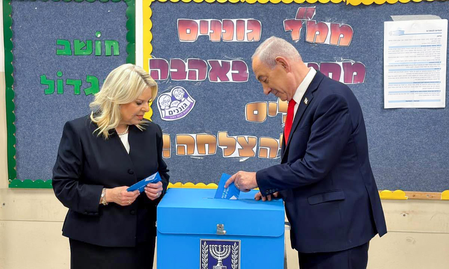
Earlier in the day, Israel went to the polls as voters began casting ballots to elect members of the 26th Knesset, the country’s parliament, with around 7.3 million people eligible to vote.
The final opinion polls released ahead of the election indicated a close contest between incumbent Prime Minister Benjamin Netanyahu’s bloc and opposition factions led by former Israel Defence Force (IDF) chief Gadi Eisenkot’s Yashar party.
However, both sides are projected to fall short of a parliamentary majority if they stick to their campaign pledges to avoid forming a government with certain other factions, The Times of Israel reported.
The elections mark the first electoral contest since the October 7, 2023, Hamas attack, amid significant shifts in the political landscape and the issues shaping voter priorities since the 2022 elections.
–IANS
ksk/dan