
Mecca Joint Defence Agreement: A new security bloc and India’s strategic questions

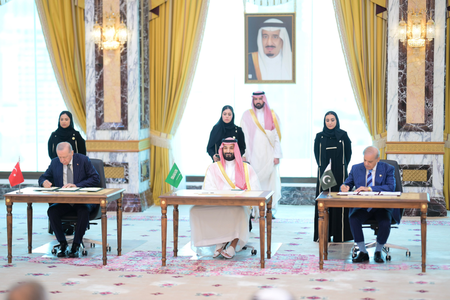
New Delhi, Aug 7 (IANS) The newly signed Mecca Joint Defence Agreement between Pakistan, Saudi Arabia, and Turkey marks a significant development in regional security cooperation, as, according to Pakistan’s Foreign Ministry, it states that an armed attack against any one of the three countries would be regarded as an attack against them all, while also expanding defence cooperation across multiple domains.
Security analysts believe the agreement is largely a consequence of the changing strategic dynamics in West Asia following the US-Israeli military action against Iran, Tehran’s retaliation against American bases, and growing concerns over the vulnerability of Gulf energy and water infrastructure. In this view, the pact is primarily designed to strengthen collective deterrence in an increasingly volatile region, say experts.
However, the agreement also raises important questions for India.
“One key issue is how the mutual defence clause would be interpreted if India were compelled to conduct military action against terrorist infrastructure in Pakistan following a major cross-border terrorist attack,” an analyst noted.
India has consistently maintained that counter-terrorism operations conducted in self-defence are fundamentally different from acts of aggression against a sovereign state, say analysts. Whether such a scenario would legally or politically trigger the defence clause remains uncertain and would depend on the circumstances, diplomatic consultations and the interpretation adopted by the three signatories.
Analysts also note that Turkey has steadily expanded defence cooperation with Pakistan, while Saudi Arabia possesses significant financial capacity that could indirectly strengthen Pakistan’s military resilience. “These developments naturally merit close observation from New Delhi,” an analyst said.
At the same time, India enjoys strong and growing strategic ties with Saudi Arabia, built on energy security, trade, investment and counter-terrorism cooperation. Many experts argue that Riyadh would do well to clarify that the agreement is not directed against India and does not dilute its commitment to combating terrorism in all forms.
Experts are of the view that for India, the appropriate response is neither alarm nor complacency, but careful diplomacy, continued engagement with regional partners and a firm insistence that any security arrangement must not provide political cover for cross-border terrorism.
–IANS
brt/vd