
Ladakh climate activist urges Prez Murmu to intervene over Siang Dam protests and ecology in Arunachal

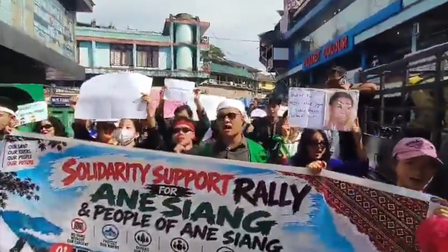
Leh, Nov 3 (IANS) Ladakh climate activist Sonam Wangchuk on Tuesday appealed to the President of India, Droupadi Murmu, to intervene to protect the rights of indigenous communities, democratic freedoms, and the fragile Himalayan ecology in Arunachal Pradesh.
In a detailed letter addressed to President Murmu, Wangchuk stated that he was writing with a heavy heart as an environmental activist who has spent decades working to protect the delicate Himalayan environment in Ladakh.
He highlighted that indigenous communities across the cold deserts of Ladakh and the lush valleys of Arunachal Pradesh share an intrinsic bond with their mountains, rivers, and forests, noting that their lives, cultures, and national security are closely linked to the health of these ecosystems.
Highlighting the situation unfolding in Arunachal Pradesh’s Siang Valley, Wangchuk sought the President’s urgent intervention regarding the resistance by indigenous communities, particularly the Adi people, against the proposed Siang Upper Multipurpose Project.
Drawing parallels between the two Himalayan regions, Wangchuk noted that the people of Ladakh understand the distress of those affected in Arunachal Pradesh, having spent years peacefully demanding constitutional safeguards under the Sixth Schedule to protect their own ecology, ancestral lands, and cultural identity.
Addressing the President directly, Wangchuk noted that as a leader hailing from an indigenous tribal community, President Murmu would understand that nature for the Himalayan people is not merely a resource to be exploited, but a mother to be protected.
He emphasised that the Adi community reveres their river as Aane Siang (Mother Siang), mirroring the sacred relationship Ladakhis maintain with their glaciers and rivers.
Expressing concern over recent developments in the Siang Valley, Wangchuk cited reports of heavy security personnel deployment, arrests of young activists, and restrictions imposed on villagers.
He highlighted allegations of police excesses against elderly villagers and criminal cases registered against those opposing the project.
He expressed distress over attempts to label citizens raising legitimate concerns as “anti-national” or “foreign-funded”.
Wangchuk asserted that the residents of both Ladakh and Arunachal Pradesh have historically stood shoulder-to-shoulder with the Indian armed forces during wars and border crises, often under hostile conditions.
He cautioned that casting baseless allegations of being foreign-funded against border populations weakens national security rather than strengthening it, as the trust and active cooperation of local communities remain strategic assets in border zones.
Citing ecological vulnerabilities, Wangchuk pointed to the seismically active nature of the Himalayas and recalled the catastrophic glacial lake outburst flood in Sikkim’s Teesta basin as a warning against unviable large-scale infrastructure interventions in mountain river systems.
Wangchuk concluded his letter by urging the President to facilitate:
The withdrawal of excessive security forces from civilian areas in the Siang Valley to restore normalcy.
The release of individuals detained for peaceful protests, the withdrawal of unjustified criminal cases, and an independent inquiry into allegations of police excesses.
A halt to coercive measures and project-related actions pending meaningful dialogue with affected indigenous communities regarding their land rights.
An independent and comprehensive assessment of the project’s environmental, geological, seismic, and social impacts prior to taking further steps.
–IANS
sq/dan