Khyber Pakhtunkhwa emergency puts Pakistan’s democratic credentials, EU trade perks under scrutiny: Report

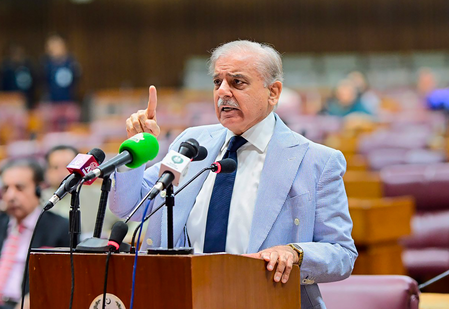
New Delhi, Oct 18 (IANS) Pakistan’s decision to suspend the elected Pakistan Tehreek-e-Insaf (PTI) government in Khyber Pakhtunkhwa under emergency powers has pitted its fight against militancy against basic democratic norms, and could invite closer European Union (EU) scrutiny of its trade privileges, a report said.
According to a report in Athens-based ‘Directus’, while Islamabad has projected the move as a response to rising militancy, the opposition sees it as an effort to strip the party of the last major province it governs.
“By suspending an elected provincial administration controlled by the Pakistan Tehreek-e-Insaf (PTI), the federal government has taken a step with consequences extending far beyond counterterrorism,” the report stated.
President Asif Ali Zardari approved the emergency under Articles 232 and 234 of the Constitution on October 11 on the advice of Prime Minister Shehbaz Sharif’s cabinet, handing the province to Governor Faisal Karim Kundi and an 11-member advisory council for an initial six months.
“The central question is whether the circumstances cited by Islamabad justify suspending an elected administration and transferring its powers to a federally appointed Governor,” the report said.
It noted that the federal government had, on October 12, accused the suspended provincial administration of colluding with militants, a charge the PTI denies, and said such serious allegations needed proof and a fair legal process rather than political rhetoric.
“Yet the existence of a genuine threat does not, by itself, resolve whether suspending an elected government is necessary or proportionate,” the report stated.
The arrests of provincial leaders and PTI figures, and clashes between police and supporters of jailed former Prime Minister Imran Khan, have only hardened the standoff, it said, adding that the crisis poses a fresh test for Pakistan under the EU’s Generalised Scheme of Preferences Plus (GSP+), which has given it preferential access to European markets since 2014.
“The suspension of an elected provincial administration, the detention of political figures and the treatment of protests raise questions relevant to political participation, the rule of law and the exercise of state power,” the report said.
It pointed out that a European Commission review in July had already found Pakistan backsliding on some of its commitments, though Brussels has not formally opened a GSP+ review over the emergency.
–IANS
ksk/vd