Kashi illuminated by 11 lakh diyas on Dev Deepawali, ghats and temples glow with devotion

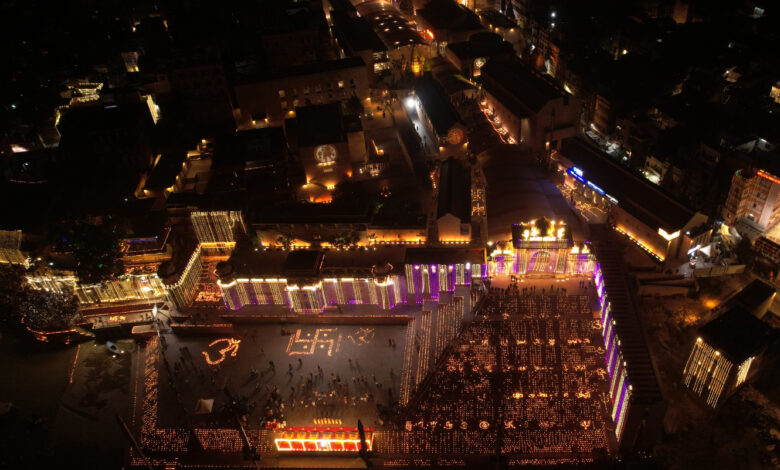
Varanasi, Nov 24 (IANS) The holy city of Kashi came alive with an extraordinary spectacle of light and devotion as nearly 11 lakh earthen lamps illuminated its iconic ghats, ponds, reservoirs and temples on the occasion of Dev Deepawali, celebrated on Kartik Purnima. Millions of flickering lights along both banks of the Ganga transformed the city of Lord Shiva into a breathtaking sea of illumination.
Organised with the initiative of the Yogi Adityanath-led Uttar Pradesh government, the grand celebration showcased a unique blend of public participation, Sanatan traditions, patriotism and modern tourism facilities.
Reflecting the Upanishadic message, ‘Tamaso Ma Jyotirgamaya’ (Lead me from darkness to light), the festival conveyed the timeless message of moving from darkness to light, ignorance to knowledge and narrow-mindedness to openness.
As dusk descended, thousands of lamps began glowing along the two banks of the Ganga. The crescent-shaped ghats of Kashi presented a mesmerising sight, as if countless stars had descended from the heavens to illuminate the earth. The spectacular rows of lamps extended from the ghats to the sandy stretches across the river, creating a divine atmosphere throughout the city.
This year, around one lakh lamps were made from cow dung, adding an environmentally conscious dimension to the celebrations. Besides government initiatives, various committees and residents actively participated in the traditional lamp-lighting ceremony.
At Namo Ghat, Uttar Pradesh Tourism and Culture Minister Jaiveer Singh inaugurated the Dev Deepawali celebrations by lighting the first lamp as the chief guest. On the occasion, he also launched the Uttar Pradesh Tourism Department’s GPS-based ‘Varanasi 84 Ghats Audiobook-Audio Tour’.
The initiative will enable tourists to explore the history and significance of all 84 ghats of Kashi through audio guides available in 15 languages. Following the launch, the minister boarded a cruise to witness the Ganga Aarti and the spectacular illumination of the city’s historic riverfront.
At Dashashwamedh Ghat, the world-famous Ganga Maha Aarti reflected a powerful combination of spirituality, patriotism and social responsibility. Dedicated to the martyrs of the Kargil War, the special ceremony paid tribute to fallen soldiers through a replica of the Amar Jawan Jyoti.
Three soldiers were also posthumously honoured with the ‘Bhagirath Shaurya Samman’. The grand Ganga Aarti was performed by 21 priests and 42 young women representing divine forms associated with Riddhi and Siddhi.
Amid the resonating sounds of conch shells and damrus, devotees were also encouraged to protect and conserve the Ganga. The ceremony carried a strong message of river cleanliness and environmental preservation, urging people to take a pledge to keep the sacred river clean.
The celebrations extended well beyond the main ghats. Deepdaan ceremonies were organised at Markandey Mahadev Temple along the Ganga-Gomti confluence, Shastri Ghat on the Varuna River, and several ponds, reservoirs and temples across the Kashi region.
At various ghats, artistic representations of Shivlings and colourful rangolis were created using lamps. One particularly striking design featured a Shivling made of diyas, with the words ‘Radhe Radhe Kamal Khila De’ inscribed beneath it.
A spectacular drone show added a modern dimension to the festivities, displaying images of Prime Minister Narendra Modi and Uttar Pradesh Chief Minister Yogi Adityanath. An artistic tribute to the Chief Minister’s mother was also presented.
The Shri Kashi Vishwanath Dham was beautifully decorated with flowers and colourful electric lights. Lamps were lit across the temple complex, while floral rangolis enhanced the beauty of various sections of the shrine. Devotees also performed Deepdaan at Lalita Ghat.
In view of the large number of pilgrims visiting the temple, special arrangements were made to ensure smooth darshan, security and other essential facilities.
From Namo Ghat to Assi Ghat, the city’s prominent riverfront stretches were illuminated with decorative electric lights, high-mast floodlights and elaborate lighting installations. Government buildings, offices and major road intersections were also decorated, making the entire city sparkle under colourful and milky-white illumination.
Given the massive gathering of devotees and tourists, Varanasi was declared a no-fly zone for the occasion. Drone operations without prior permission were prohibited. Four tethered drones were deployed for aerial surveillance, while an anti-drone system was installed to detect unauthorised drone activity. Continuous monitoring was also carried out through the Trinetra surveillance system.
For effective security management, the ghats on both banks of the Ganga and major event venues were divided into eight zones, 16 sectors and 32 sub-sectors. The river area was separately divided into seven sectors.
Extensive surveillance arrangements included CCTV cameras, drones and watchtowers. A comprehensive security and crowd-management plan was implemented, covering traffic regulation, parking, emergency response, rapid action teams and the management of entry and exit points.
Special attention was also given to the safety of devotees travelling in boats along the Ganga. With a large number of vessels operating during the celebrations, separate lanes were designated for boats moving in opposite directions.
A floating water rescue station was established at Chet Singh Ghat to ensure immediate response in case of emergencies. Personnel from the National Disaster Response Force (NDRF) and the water police were deployed with motorboats and modern rescue equipment.
Medical teams and water ambulances were also stationed to provide immediate assistance to devotees and tourists whenever required.
–IANS
vkt/brt/dan