
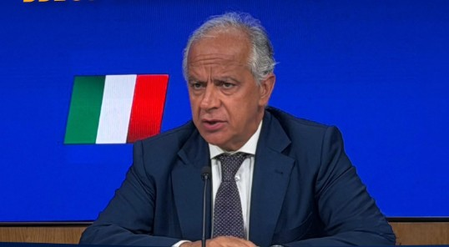
Rome, July 31 (IANS) The Ministry of Interior of Italy, Matteo Piantedosi, on Friday ordered the closure of maritime and air borders with Spain, amid the ongoing migrant crisis in Ceuta, with a large number of migrants arriving.
The decision was taken following the most recent intelligence acquisitions analysed in particular by the Committee for Immigration and Border Security Analysis, which Minister Matteo Piantedosi chaired this morning at the Viminale, following the migratory crisis in Ceuta, Italian News Agency Adnkronos reported.
Over 48,000 migrants have returned to Morocco from the Spanish enclave of Ceuta, where approximately 60,000 people have arrived in recent days. The Spanish Interior Ministry announced this in Madrid.
Morocco’s Interior Minister, Abdelouafi Laftit, assured the Madrid government regarding taking back all the migrants.
“We will take everyone back, without any exception,” stated the Minister after approximately 60,000 Moroccans arrived in Ceuta, the Spanish exclave considered a gateway to Europe, in recent days.
The two countries “have committed to reviewing and implementing measures that allow the return, as soon as possible, of all people who entered Ceuta illegally,” said Spanish Interior Minister Fernando Grande-Marlaska.
The North African country “has no interest in projecting the image of a country in crisis,” with young people ready to flee the country, just two days after King Mohamed VI’s Throne Speech, during which he asserted the strength of a growing, politically stable country ready to welcome foreign capital, said a Moroccan analyst interviewed by Adnkronos.
A Morocco “that has become the leading car exporter in Africa,” the king had said on Wednesday, where “the automotive, aeronautics, renewable energy, and agri-food sectors are the essential pillars of the national productive fabric, due to their ability to attract investment and their capacity to create wealth and employment.”
In Madrid, it is believed that the crisis was triggered by the Spanish Supreme Court’s ruling of July 8, according to which migrants who arrived by swimming into the exclave must instead be subject to an administrative procedure, which is longer and offers greater guarantees. A new situation perceived as an opportunity by migrants. And human trafficking organisations seized upon this, amplifying and distorting the message.
–IANS
ksk/dan