
Hormuz blockade heightens worry of IOR nations, latter moot similar restraints on sea-routes: Report

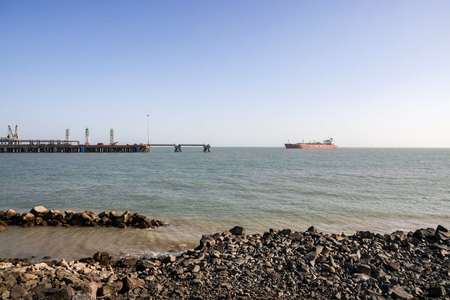
New Delhi, May 10 (IANS) The blockade of Strait of Hormuz, for about two months by the Iranian and US forces in the Persian Gulf has resulted in escalation of oil prices and its cascading effect on economies worldwide, however, one point being increasingly debated by nations lining the Indian oceans is that — should they also put similar restraints and limitations on their sea-routes.
The Hormuz Strait has been at the centre of US-Iran war, with their animosity turning into a nightmare for economies, dependent on crude oil supplies from the Gulf.
US forces recently launched ‘Project Freedom’ to free it but then paused due to possible peace deal between the two nations.
The prospects of Iran levying a fee on all vessels passing through the Iranian ports, has sparked a widespread discussion among the Indian Ocean Region (IOR) nations for responding with a ‘tit-for-tat’ measure.
According to a leading portal PRF, the IOR countries have not articulated such a policy but Iran’s tactics have let them talking about ways and means to ensure freedom of navigation.
The article, penned by the news portal highlights series of concerns and worries raised by nations in the Indian Ocean including Singapore, Indonesia and others, and also how other routes like ‘Strait of Malacca’ could also be ‘weaponised’ to neutralise Iran’s proposed toll charges.
It brings to light Singapore’s Foreign Minister Vivian Balakrishnan’s statement as to now the Strait of Hormuz is about 21 miles wide while the Strait of Malacca at its narrowest is about two miles wide.
Though, Singapore Foreign Minister refrained from any possibility of Singapore levying a fee on ships transiting through the straits adjacent to it but called upon all nations to rigorously adhere to Article 44 of UNCLOS, which makes it obligatory for states bordering narrow sea routes to ensure that there is no ‘suspension of transit passage’.
“In another instance, Indonesia’s President Prabowo Subianto noted that the Strait of Hormuz determines the fate of many nations, including the price of oil and asked: “Do we realise that 70 per cent of East Asia’s energy needs and 70 per cent of its trade pass through the Indonesian straits?” On the other hand, Indonesia’s Finance Minister reportedly stated that his country could take inspiration from Iran and collect substantive fees from ships passing through the Strait of Malacca, with the proceeds split among Indonesia, Malaysia, and Singapore,” it reported.
On Thailand, it said that the nation was taking lessons from the Strait of Hormuz closure and was planning to build a land bridge connecting the Andaman Sea and the Gulf of Thailand.
The portal also opines, “If the IOR countries emulate Iran and levy tolls on ships transiting international straits, it would make international trade costly and generate considerable geopolitical instability. Perhaps it is time for the IOR countries, as India’s External Affairs Minister S. Jaishankar noted, to work towards greater collective resilience by building trusted partnerships.”
Notably, the IOR comprises around 33 nations, 2.9 billion people, and handles 42 per cent of global crude oil.
For India, 95 per cent of its trade and about 70 per cent by value transits through the IOR.
Like the Strait of Hormuz, numerous other narrow sea routes, such as Bab el-Mandeb, the Strait of Malacca, the Sunda Strait, and the Lombok Strait, define the movement of goods in the IOR.
–IANS
mr/khz