Greece: Nationwide 24-hour strike disrupts transport and public services across

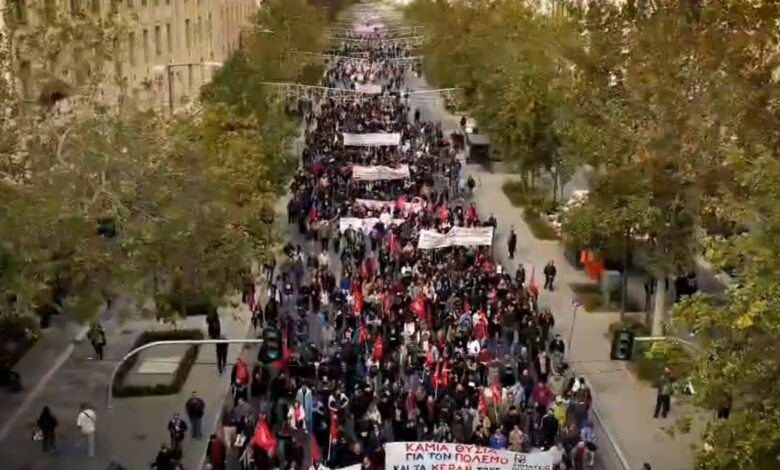
Athens, Nov 25 (IANS) A 24-hour nationwide strike called by Greece’s largest public-sector union, ADEDY, alongside dozens of labour centres and trade unions across the country, severely disrupted transport networks and essential public services on Wednesday.
According to a report by the Xinhua News Agency, demonstrators marched towards the parliament building in Athens carrying banners and chanting slogans to demand higher wages and increased funding for pensions, healthcare, and education.
Public transport in the capital was heavily affected, with metro, electric railway, and tram services operating on sharply reduced schedules. Maritime travel ground to a halt as ferries remained docked at ports across the nation, while air travel also suffered disruptions after flight information personnel at 15 regional airports joined the walkout, forcing domestic carriers Aegean Airlines and SKY Express to cancel numerous flights.
Parallel demonstrations were held in dozens of cities nationwide, impacting operations at public schools, state hospitals, and various municipal departments.
In an official statement, ADEDY called upon the government to implement policies capable of effectively addressing Greece’s pressing economic, labour, and social challenges.
Andreas Kargopoulos, president of the Federation of Secondary Education State School Teachers (OLME), stated that thousands of educators had joined the strike to protest against poverty-level wages, unsafe and unsuitable school infrastructure, and acute staff shortages.
Private-sector unions representing construction workers, accountants, and miners, among several other industries, also participated in the walkout in solidarity.
The protesting unions are pressing for substantial pay hikes and the restoration of the 13th and 14th annual bonus salaries for civil servants, which were abolished under earlier austerity measures. Their demands also include lower electricity and fuel tariffs, price caps on essential commodities, reduced value-added tax on basic goods, and urgent state intervention to ease the housing crisis, including strict rent controls.
–IANS
scor/dan