
E20 blending may result in 3-5 pc mileage reduction but offers myriads of benefits: Petroleum Ministry

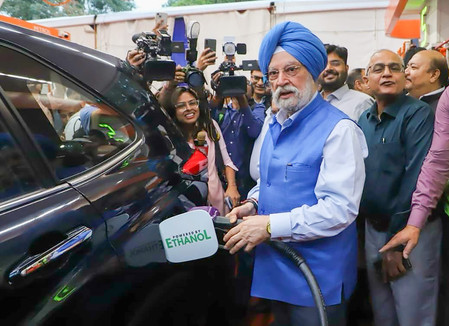
New Delhi, July 10 (IANS) Petroleum Ministry on Friday said that with E20 blending, there may be a 3-5 per cent reduction in fuel economy in some vehicles, but mileage is only one parameter as E20 offers a significantly higher-octane rating, superior anti-knock characteristics, faster combustion, better pickup, smoother acceleration and cleaner engine operation.
The ministry said that for E10 compatibility, manufacturers were consulted well in advance as early as 2020-21.
India achieved its E10 target (10 per cent ethanol blending in petrol) in June 2022, five months ahead of the date in ESY 2020-21.
“For E20, an even more rigorous process was followed. Extensive consultations were held with automobile manufacturers, component suppliers, testing agencies, and research institutions. The roadmap of the IMC had been in the public domain from 2021 and laid out a calibrated path to reaching E20,” the ministry said in a detailed note.
Every aspect was examined starting from material compatibility, engine calibration, fuel systems, drivability, durability, emissions and fuel efficiency, it added.
According to the statement, before E20 was rolled out, the government undertook several rounds of detailed consultations with all the stakeholders such as automobile manufacturers, technical experts, testing agencies and other stakeholders to ensure readiness across the ecosystem.
“Had automobile manufacturers not been fully satisfied with the results, they would never have stood behind the product or honoured vehicle warranties. The fact that virtually every manufacturer today is honouring warranty for all vehicles (old or new) is because they have been part of the consultation,” it noted.
Maruti Suzuki serviced 2.84 crore vehicles during FY 2025-26, including 1.5 crore older, non-E20-certified vehicles, and reported no E20-linked corrosion, abnormal wear or component-life damage.
Hero MotoCorp has reported a similar field experience. This real-world evidence is far more reliable than isolated anecdotes.
The ministry said that E20 produces negligible particulate emissions and substantially reduces lifecycle carbon emissions by around 40 per cent.
“In short, it is a cleaner, higher-quality and more efficient fuel than either E10 or pure petrol,” it added.
People often cite premium petrol as an example. That comparison is misplaced.
According to the official statement, premium fuels are niche products sold in limited quantities at a significant price premium because specialised performance-enhancing additives are blended into them. They are not separate from nationwide base fuel streams.
Running parallel nationwide supply chains for pure petrol, E10 and E20 would be an entirely different proposition, said the ministry.
Over the past several years, public sector banks have financed nearly Rs 1 lakh crore per year of investments in ethanol production and associated infrastructure.
Dedicated ethanol plants, distilleries, storage facilities and logistics networks have been created to meet India’s blending targets, said the ministry.
–IANS
na/