COP31 package brings together billions in clean energy, stronger grids, electrifying transport

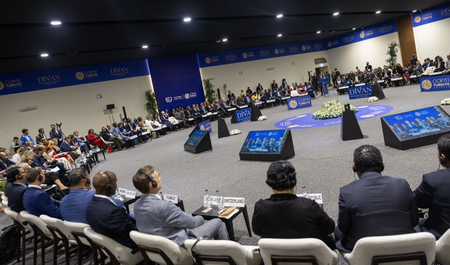
Antalya (Turkey), Nov 19 (IANS) The COP31 Global Climate Action Agenda Electrification Delivery Package — bringing together billions in clean energy investment plans, stronger grids, expanding electricity access and progress in electrifying transport and industry — was presented to nearly 200 nations on Thursday in support of the global opportunity of an electrified economy.
In a formal first for a UN Climate Summit that has put real economy action at the heart of the conference, the package sets out new actions and updates profiled or announced at COP31, involving over 150 countries plus the European Union, 37 cities and more than 260 businesses across six continents.
The countries range from small island states to the world’s largest economies, and more than 150 countries plus the EU — representing over two-thirds of global GDP — are taking action either individually or collectively to shift to clean and electrified energy.
The cities through the Yearly Offer of Action of C40 Cities and the Global Covenant of Mayors, 37 cities joined the charge, either reporting electrification progress in 2026 or announcing electrification actions for 2027. Plus, more than 260 businesses with over $4 trillion annual revenue announced or profiled actions at COP31, either individually or as part of a coalition.
And enough grids to stretch more than halfway around the world were built, as members of the Utilities for Net Zero Alliance (UNEZA) announced the deployment of more than 21,000 km in 2025.
UNEZA also announced combined annual investment plans of at least $156 billion across grids, renewables and storage, five per cent higher than last year and 35 per cent higher than in 2024.
For transport, 13 zero-emission freight corridors are in development across six continents, covering more than 29,000 km of roads — roughly three-quarters of the way around the planet. Electric vehicle sales in countries that have signed the ZEV Declaration reached 2.1 million in the first half of 2026, while six cities committed to some 2,200 new electric buses in 2027.
For climate finance, AMPLIFi, the Climate Investment Funds (CIF) new financing mechanism, announced it is now operational with its first set of projects and first large donor contribution from Britain of 400 million pounds, aiming to mobilise up to 5 billion pounds in clean power, grids, storage and electrification in emerging markets and developing economies.
At COP31, AIB announced that it is doubling its 2030 green and transition lending target from 30 billion to 60 billion euros, building on 28 billion euro already deployed since 2019. Octopus Energy launched an Asia Electrification Fund at COP31, aiming to raise $600 million for solar, wind, storage and electric vehicle (EV) charging projects, already backed by $50m from Japanese investors.
And BBVA announced at COP31 that it has channelled nearly 60 billion euro in sustainable business activity linked to electrification from January 2025 to September 2026.
The package — to be formally presented at the High-Level Closing of the Action Agenda at COP31– supports the COP31 Presidency’s electrification priority. It consolidates results and announcements shared during COP31, demonstrating how governments, businesses, investors, cities and international initiatives are translating climate ambition into practical voluntary action. The package connects actions necessary to shift the energy system towards faster electrification — expanding clean power, upgrading grids and storage, extending electricity access, and electrifying transport, buildings and industry.
The package does not deliver everything needed to electrify at the pace required to achieve the goals of the Paris Agreement, but it is a clear sign of momentum, progress and potential to go further.
Members of the Utilities for Net Zero Alliance (UNEZA) announced combined annual investment plans of at least $156 billion across grids, renewables and storage, five per cent higher than last year and 35 per cent higher than in 2024.
Alongside those plans, the alliance reported that its members built more than 21,000 km of new grid in 2025, up 50 per cent from 2024.
New initiatives will help countries strengthen the infrastructure needed for electrification.
Turkey and the International Renewable Energy Agency (IRENA) launched D-GRIDs to support distribution-grid planning, investment, digitalisation and resilience in developing countries. The Green Grids Initiative’s Grids Technical Assistance Solutions Hub will connect countries with more than 20 specialist organisations to help governments and utilities address grid challenges.
(Vishal Gulati can be contacted at vishal.g@ians.in)
–IANS
vg/dpb