
Bihar: Sasaram Sadar Hospital floods after one hour of rain, triggers criticism

Patna, June 13 (IANS) The first spell of heavy rainfall in Bihar brought much‑needed relief from the intense summer heat, but it also exposed serious infrastructural shortcomings at the Sasaram Sadar Hospital in Rohtas district.
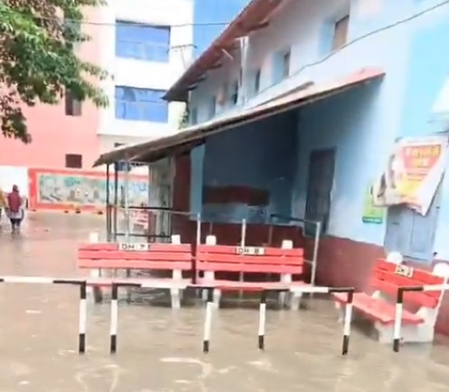
After nearly an hour of torrential rain on Saturday, the premises of the district’s largest government hospital were submerged under water, creating severe difficulties for patients, attendants, doctors and hospital staff.
Large portions of the hospital campus, including the main road leading to the trauma centre, the OPD building, the TB centre, the general ward, the blood bank and the Civil Surgeon’s office complex, were inundated due to poor drainage arrangements.
The accumulated rainwater turned the hospital premises into what many locals described as a “pond‑like” condition.
Patients and their attendants were seen wading through knee‑deep water to access treatment facilities. Many struggled to keep their belongings and clothes dry while moving through the waterlogged corridors and pathways.
Healthcare workers and doctors also reportedly faced major challenges while commuting between departments during the flooding.
Residents said the situation was not new and that severe waterlogging had become a recurring issue at the hospital during every monsoon season. Locals alleged that the absence of an effective drainage system caused rainwater to accumulate across the campus even after moderate rainfall.
Local resident Raju Kumar expressed concern over the condition of the hospital, stating that it served lakhs of people in the district and that patients were forced to suffer every year because of waterlogging. He urged the administration to implement a permanent solution to the problem.
Meanwhile, hospital manager Ajay Kumar Gupta said the waterlogging occurred because of sudden heavy rainfall and that efforts were underway to drain the accumulated water from the premises. He added that the concerned department would be informed so that preventive measures could be taken in the future.
The incident has once again raised concerns over infrastructure management in critical public healthcare institutions. With rainwater still accumulated across parts of the hospital premises, patients and medical staff continue to face difficulties, highlighting the urgent need for long‑term drainage and infrastructure improvements at the facility.
–IANS
ajk/dan