
Bangladesh: Security alert triggers concerns over resurgence of Islamist extremism

Dhaka, May 7 (IANS) Bangladesh’s challenge with Islamist extremism appears structurally embedded rather than episodic, with the ruling government inheriting a grave security problem linked to alleged incompetence of the former interim government led by Muhammad Yunus.
The situation not only threatens Bangladesh but also signals broader regional security risks, making counterterrorism a litmus test for the new government, a report has detailed.
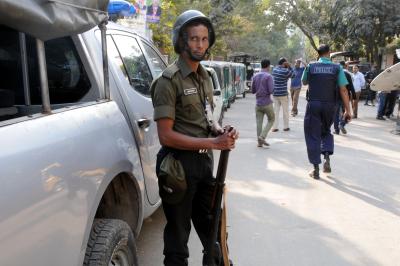
“Bangladesh has been on a nationwide security alert following intelligence reports of possible militant attacks on the country’s key installations, including the Parliament building, security installations, places of worship, recreational centres and public areas. The alert has been issued by police headquarters after the arrest of a member of a banned extremist organisation who claimed to have maintained contacts with two dismissed military personnel,” an editorial in ‘Dhaka Tribune’ recently detailed.
According to the report, the intelligence assessment classified as “urgent confidential” and not naming the extremist organisation has triggered concerns over resurgence of extremism in Bangladesh.
In the aftermath of the 2024 July Uprising, Bangladesh experienced a prolonged phase of severe security vacuum. Following the fall of Sheikh Hasina-led Awami League government, a complete security lapse unfolded with mob violence, lootings, and mass prison breaks.
“Over 70 militants are believed to have escaped prisons, along with weapon lootings from prison guards. During the interim government, 11 top criminals, as well as 174 linked to militant organisations, were released on bail. The most disturbing case has been the release of ABT chief Jashimuddin Rahmani on bail in August 2024, who was arrested for the murder of blogger and Shahbagh activist Rajib Haider in 2013,” the report mentioned.
The report highlighted that after Hasina’s ouster, a transnational-linked militant organisation, Hizb ut-Tahrir Bangladesh (HuT-B), banned in 2009 over a national security threat, drew attention after calling on the interim government to withdraw the ban imposed by the Awami League government.
Subsequently, a procession in Dhaka involving urban-educated college students holding an ISIS flag and demanding the establishment of an Islamic caliphate in Bangladesh once again put the banned HuT-B in focus, while 10 linked to this procession, including the organisation’s media coordinator, were arrested.
Highlighting that Islamic extremism gained a foothold in Bangladesh during the Yunus regime, the report said, “Nevertheless, the interim government appointed alleged Hizb ut-Tahrir founding member Nasimul Gani as Home Secretary by Bangladesh’s interim government in December 2024. In March 2025, HuT-B held a ‘March to Khilafat’ protest near Dhaka’s Baitul Mukarram mosque, which, although stalled by law enforcers, reflected the unapologetic public resurgence of Islamist extremism in the country under the interim rule.”
–IANS
scor/as