

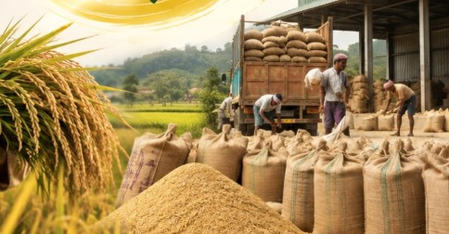
Guwahati, Aug 24 (IANS) Assam Chief Minister Himanta Biswa Sarma on Monday said the state government has set an ambitious target of procuring 10 lakh metric tonnes (MT) of paddy annually, with farmers to benefit from assured procurement at enhanced Minimum Support Prices (MSP).
CM Sarma said that the government has already procured more than two lakh MT of paddy directly from farmers within the first 100 days of its tenure.
“In Assam, we set an ambitious target of procuring 10 lakh MT of paddy annually, ensuring our farmers benefit from assured procurement at enhanced MSPs,” CM Sarma said in a post on social media.
He said that within the first 100 days of the government, more than two lakh MT of paddy had been procured directly from farmers, describing them as the state’s “Annadatas”.
The Chief Minister said the initiative aimed at strengthening the agricultural economy and ensuring farmers have access to a reliable procurement mechanism for their produce. The 10 lakh MT annual target is expected to significantly expand the scale of government-backed paddy procurement in Assam and provide greater price assurance to cultivators.
CM Sarma’s announcement comes amid the state government’s focus on increasing farmers’ income and strengthening the agricultural sector through assured markets and better procurement mechanisms.
Direct procurement from farmers is also aimed at ensuring that cultivators receive the benefits of the MSP announced for their produce, while reducing their dependence on uncertain market prices.
The Chief Minister highlighted the procurement achieved during the first 100 days as an important milestone towards meeting the larger annual target.
The government is now expected to scale up procurement operations across the state to achieve the 10 lakh MT target and ensure wider participation of farmers in the procurement process.
The initiative is part of the Assam government’s broader emphasis on improving agricultural livelihoods and providing stronger economic support to the farming community.
–IANS
tdr/dpb