
New Delhi, June 12 (IANS) Pakistan is further being engulfed by the very fires it helped to ignite – from the rugged mountains of Khyber Pakhtunkhwa to the deserts of Balochistan, and the simmering unrest in Pakistan‑Occupied Jammu and Kashmir (PoJK) to the volatile Afghan frontier – the state is fighting wars it stoked itself.
Add to this the turbulence spilling over from Iran, and Pakistan stares at further descent into chaos.
Since the major Pakistan-Afghanistan border firefight and the closure of trade routes in October 2025, regional powers have tried to organise peace talks multiple time; but failed.
Earlier this week, an informal round of talks was held in Istanbul, after a similar attempt in China’s Urumqi, which followed stalled meetings between Islamabad and Kabul on earlier occasions.
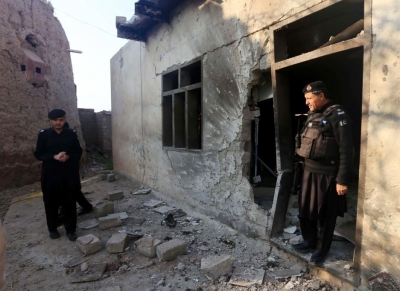
Even before the Istanbul meeting could conclude on Tuesday, Pakistan launched airstrikes inside Afghan territory. The Taliban retaliated with heavy firing at the Durand Line.
Each round of talks has been overshadowed by renewed violence, raising doubts about whether dialogue can meaningfully de‑escalate the crisis.
In the 1980s, Pakistan gave birth to and nurtured the Afghan Mujahideen and later, the Taliban. The latter, after taking over Kabul in 2021, are unwilling to take orders from either Pakistan’s civilian government in Islamabad or Rawalpindi’s army brass.
Cross‑border clashes have escalated into open hostilities, with Pakistani airstrikes on Afghan soil and retaliatory raids by Taliban fighters.
Pakistan’s military, once the patron of the Taliban, is now locked in a war against them.
Meanwhile, Balochistan’s insurgency has grown with the Baloch Liberation Army (BLA) and allied groups attacking military convoys, energy pipelines, and other targets.
For Beijing, Balochistan is the linchpin of its Belt and Road ambitions; for Pakistan, it is a bleeding wound.
The insurgency also has a transnational dimension. Iran’s Sistan‑Baluchestan province faces similar unrest, and Tehran has accused Islamabad of tolerating militant sanctuaries.
Thus, Pakistan’s domestic rebellion doubles as a regional liability, straining ties with a neighbour it can ill afford to antagonise.
In Khyber Pakhtunkhwa (KP), the alleged Tehreek-e-Taliban Pakistan (TTP) militia has entrenched itself as a parallel authority, with the writ of the Pakistani state shrinking. Despite repeated military operations, the insurgents remain resilient. The province serves as a reminder of how state neglect and militant patronage can hollow out sovereignty.
And to the country’s northeast lies PoJK, for long the launchpad for Islamabad-Rawalpindi’s cross‑border militancy against India.
But the strategy has boomeranged. India’s counter‑terror operations have intensified, while unrest within PoJK itself exposes Islamabad’s weakening grip.
Protests against economic hardship and political repression add another layer of instability. What was meant to be a pressure point against India has become a pressure cooker at home.
Pakistan’s entanglement with Iran adds another dimension. Tehran views Islamabad with suspicion, particularly over militant activity in the Baloch regions straddling the border.
Pakistan’s attempts to mediate between Iran and the United States have been undermined by its own instability.
The common thread across these crises is Pakistan’s long‑standing policy of militant patronage. For decades, Islamabad nurtured proxies to project power in Afghanistan and Kashmir. That policy has now come home to roost. The master of proxies is now their victim. Pakistan’s strategic depth has become a strategic disaster.
While fighting wars on multiple fronts, Pakistan’s economy is on a downslide – rooted in a vicious cycle of debt, dwindling reserves, and political turmoil. The country’s economy has repeatedly teetered on the brink of default, forcing Islamabad to juggle between China and the United States.
Beijing, through the China‑Pakistan Economic Corridor (CPEC), provides infrastructure financing and long‑term investment, but at the cost of mounting debt and dependence on the Dragon’s strategic agenda. Washington, meanwhile, remains crucial as Pakistan’s gateway to IMF bailouts and global financial legitimacy, leveraging US influence over multilateral institutions.
In effect, Islamabad is caught between two patrons, neither of whom offers unconditional support, underscoring how financial fragility has become a geopolitical vulnerability.
–IANS
jb/vd