

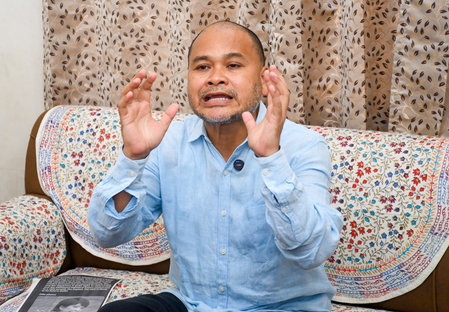
Guwahati, July 16 (IANS) Raijor Dal chief and Sibsagar MLA Akhil Gogoi on Thursday mounted a sharp attack on the Centre’s proposed ‘One Nation, One Election’ (ONOE) initiative, alleging that the move is aimed at weakening India’s federal structure and centralising power.
Addressing reporters, Gogoi claimed the proposal would fundamentally alter the constitutional framework by reducing state autonomy and undermining the country’s federal system.
He alleged that the plan was an attempt to convert India into a unitary form of governance, contrary to the spirit of the Constitution.
“One Nation, One Election is an attempt to transform India from a federal democracy into a completely unitary state. India is a Union of states, and no government has the authority to dilute that constitutional principle,” Gogoi said.
The Raijor Dal chief urged the Centre to withdraw the proposal, maintaining that simultaneous elections were incompatible with the country’s democratic and constitutional framework.
He further alleged that the initiative reflected an authoritarian mindset and warned that it could face widespread public opposition if pursued.
Gogoi claimed that restructuring the electoral system in such a manner would erode democratic institutions and the federal balance envisaged by the Constitution.
He warned that if the proposal was forced upon the people, there would be a massive democratic movement across the country, with citizens uniting to protect the Constitution and India’s federal character.
The legislator also asserted that opposition parties and civil society groups would resist any attempt to implement the proposal if it compromised the rights and powers of the states.
The Centre’s proposal to hold simultaneous elections to the Lok Sabha and state legislative assemblies has triggered an intense political debate across the country.
While the government has argued that synchronised polls would reduce election‑related expenditure, improve governance, and minimise disruptions caused by frequent elections, several opposition parties have opposed the proposal, contending that it raises constitutional, logistical, and federal concerns.
The issue continues to remain one of the key political flashpoints between the Centre and the Opposition.
–IANS
tdr/dan