
7 years after Article 370 abrogation, focus must shift from politics to performance: Report

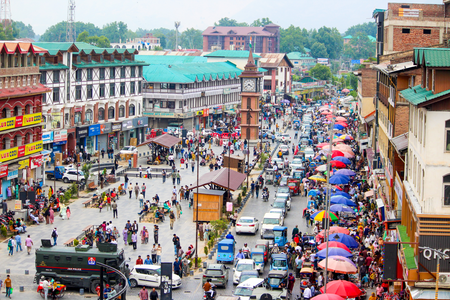
New Delhi, Aug 5 (IANS) Seven years after the constitutional changes of August 5, 2019, Jammu and Kashmir stands at a crucial juncture where the debate should move beyond constitutional amendments and instead focus on the tangible changes witnessed on the ground, as well as the challenges that still need to be addressed, according to a recent report.
Article 370 was abrogated on August 5, 2019, after the Central government led by Prime Minister Narendra Modi revoked the special status of the erstwhile state of Jammu and Kashmir through a Presidential Order, ending the constitutional provisions that had granted it special autonomy.
The report argues that history will ultimately assess the significance of August 5 not merely on the basis of the constitutional provisions that were altered, but on whether those changes succeeded in building a more prosperous, peaceful and self-confident Jammu and Kashmir.
In an opinion article published in Global Kashmir, public policy commentator Syed Jahanzeb wrote that the Union Territory has undergone a visible transformation over the past seven years, particularly in terms of infrastructure and governance.
According to the article, the pace of infrastructure development has accelerated considerably compared to the previous decade.
It notes that the construction of new highways, tunnels and bridges, along with improvements in road connectivity, has significantly reduced travel time while strengthening links between different regions of Jammu and Kashmir.
The report also highlights the completion of the Udhampur-Srinagar-Baramulla Rail Link and the commencement of direct railway services, describing it as the fulfilment of a century-old aspiration to connect the Kashmir Valley with the rest of India’s railway network.
According to the article, this development has opened up fresh opportunities for trade, tourism and economic mobility.
Tourism, identified as the backbone of Kashmir’s economy, has also witnessed a strong revival despite occasional setbacks caused by isolated terrorist incidents.
The article also notes that government welfare programmes have reached deeper into rural areas through improved digital governance mechanisms and direct benefit transfer systems. It also states that electrification, healthcare infrastructure, educational institutions and public service delivery have registered measurable improvements across several districts of the Union Territory.
“While implementation challenges remain, governance today is increasingly driven by technology, transparency and time-bound monitoring. These developments deserve acknowledgement because objective analysis requires recognising progress wherever it exists,” Jahanzeb wrote in the article.
At the same time, the report identifies unemployment as one of the most pressing issues that still requires sustained policy attention, emphasising the need to create a vibrant private sector capable of generating long-term and sustainable employment opportunities.
According to the article, although investment proposals have increased and industrial policies have become more ambitious, the real test of success lies not in the number of Memoranda of Understanding signed but in the actual establishment of industries, operational enterprises and permanent jobs created for local residents.
The report also underlines the importance of renewed policy focus on agriculture and horticulture, describing both sectors as essential components of Jammu and Kashmir’s economy that require sustained institutional support.
It further argues that the education sector must undergo a strategic transformation to fully harness the potential of the region’s young population.
According to the report, universities and colleges should increasingly prioritise innovation, research, vocational education, artificial intelligence, entrepreneurship and industry-oriented skill development to prepare the youth for future employment opportunities.
The author also stresses that any assessment of Jammu and Kashmir after August 5 cannot overlook the central role of peace and security in sustaining development.
According to the article, the significant decline in several traditional indicators of unrest over recent years has contributed to the growth of tourism, improved public mobility and greater investor confidence. However, it cautions that sporadic terrorist attacks, particularly those targeting civilians and tourists, continue to serve as reminders that forces opposed to peace remain active.
Concluding the analysis, the report argues that the national conversation should now move beyond the politics surrounding August 5 and instead evaluate the outcomes achieved in the years since the constitutional changes.
According to the report, the true benchmark of success will be measured by whether young people secure meaningful employment, farmers receive fair returns for their produce, entrepreneurs invest with confidence, public institutions inspire trust and every citizen experiences the benefits of lasting peace.
The article concludes that these outcomes, rather than the debates that accompanied the constitutional changes, will ultimately determine how this chapter in Kashmir’s history is remembered.
Article 370 became part of the Constitution of India when it came into force in 1950. Since its inception, it remained one of the most debated constitutional provisions because it granted special status to the erstwhile state of Jammu and Kashmir.
On August 5, 2019, the provision was rendered inoperative, and Jammu and Kashmir was simultaneously reorganised into two separate Union Territories — Jammu and Kashmir, and Ladakh — bringing an end to its earlier constitutional status.
–IANS
sd/khz