
USFK says South Korea-US alliance remains committed to ‘conditions-based’ OPCON transfer

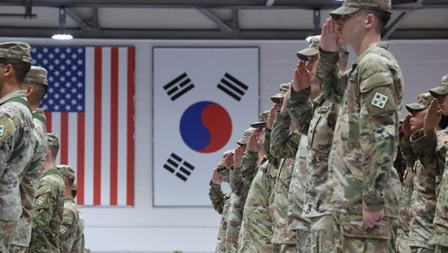
Seoul, May 28 (IANS) The South Korea-US alliance remains committed to a “conditions-based” transfer of wartime operational control (OPCON) to Seoul from Washington, a US Forces Korea (USFK) official said, amid a report that the US military has expressed concerns over a potentially rushed OPCON transition.
The official’s remarks came after the Chosun Ilbo, a Korean daily, reported that USFK told the South Korean side a hurried OPCON transition would make it difficult for American troops to come under South Korean operational control within the allies’ current combined command structure.
“The US-ROK alliance is committed to a conditions-based transition of wartime operational control, and that commitment is unchanged,” the official told Yonhap News Agency. ROK is short for South Korea’s official name, the Republic of Korea.
“Our focus remains on strengthening the combined defence and ensuring the defence of the Republic of Korea and the US homelands.”
The official did not offer any direct response to Yonhap News Agency’s request to confirm the report.
The administration of South Korean President Lee Jae Myung has been pushing to retake wartime OPCON within its five-year term that ends in 2030.
A source in Seoul has said that the Seoul government believes Seoul and Washington could meet the conditions required for the OPCON transition as early as next year.
However, USFK Commander Gen. Xavier Brunson said during a House Armed Services Committee hearing last month that the two allies aim to meet the conditions by no later than the first quarter of 2029, a remark that indicated a gap between the countries over the timing of the transfer.
The allies have been working on the conditions-based OPCON transition since they agreed on it in October 2014. The conditions include South Korea’s capabilities to lead combined Korea-US forces, its strike and air defence capabilities, and a regional security environment conducive to such a handover.
According to the Chosun Ilbo report, USFK has told Seoul that should the OPCON transition proceed without fully satisfying military requirements for the transfer, it would be difficult for US troops to fall under a South Korean general’s operational control — a scenario that it said could lead to the disbandment of the allies’ current combined command construct.
South Korea handed over operational control of its troops to the US-led UN Command during the 1950-53 Korean War. It was then transferred to the Allies’ Combined Forces Command when the command was launched in 1978.
Seoul retook peacetime OPCON in 1994, but wartime OPCON still remains in the US’ hands.
–IANS
sd/