
Washington, July 28 (IANS) Two Democratic lawmakers reintroduced legislation that would ban deceptive artificial intelligence-generated campaign advertising, warning that fabricated images, videos and voices pose a growing threat to US elections.
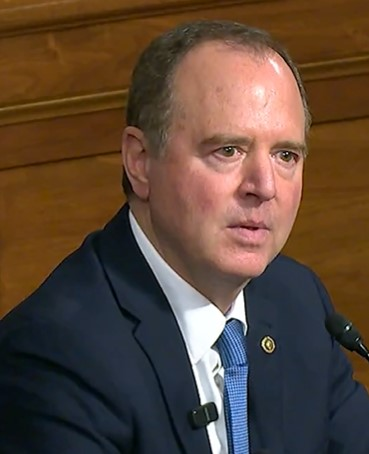
Senator Adam Schiff and Indian American Congressman Ro Khanna, both from California, said the AI Ads Act would prohibit the fraudulent misrepresentation of political candidates or committees through content created wholly or partly with AI.
The measure would also codify bipartisan recommendations made by the Federal Election Commission. Schiff first introduced the legislation in the House of Representatives during the 118th Congress.
“AI-generated fraudulent advertising which uses the likeness or voices of candidates to misrepresent their positions, campaigns, or causes, or otherwise misrepresents a candidate’s point of view is not only wrong – it poses a serious threat to our democracy that should concern all Americans regardless of their party,” Schiff said.
He said deceptive AI advertising had already appeared in political contests across the United States and could become harder for voters to distinguish from authentic campaign material.
“Fraudulent AI advertising has already proliferated in races across the country, and if Congress does not act, this runaway challenge will only get worse as AI becomes increasingly capable of blurring the lines between fact and fiction,” Schiff said. “With November elections around the corner, time is of the essence to reign in false political advertising.”
Khanna said AI could transform society but should not be allowed to deceive voters.
“AI will transform our lives and our society in many ways, but it can’t be used to mislead voters or undermine our democracy,” Khanna said. “I’m proud to lead the AI Ads Act with Senator Schiff to ban AI-generated content that deceives the public about candidates or elections.”
The bill would extend an existing prohibition on fraudulent misrepresentation, including for soliciting funds, to material produced in whole or in part by AI.
It would also broaden restrictions on the fraudulent misrepresentation of campaign authority. The provisions would cover anyone claiming to act for candidates, as well as real or fictitious political committees and political organisations.
The measure would remove the requirement that a fraudulent misrepresentation must concern something “damaging” to another candidate or political party.
The legislation is supported by the Campaign Legal Center, Citizens for Responsibility and Ethics in Washington, Common Cause, Protect Democracy and Public Citizen.
“Deceptive AI content online can manipulate voters, which is why we need this commonsense bill to ban AI ads that misrepresent candidates,” said Abigail Bellows of Common Cause. “This legislation will ensure new technology doesn’t outpace election transparency.”
Public Citizen’s Craig Holman said about 30 states had enacted laws aimed at protecting state elections from deceptive AI practices. He said Congress should approve similar safeguards for federal elections.
Khanna represents California’s 17th Congressional District, which includes parts of Silicon Valley, and has frequently focused on technology policy and its effects on democratic institutions. He is among the most prominent Indian American members of Congress.
–IANS
lkj/rs