
Washington, Sep 15 (IANS) A US federal judge has temporarily blocked the Trump administration’s four-year limit on international student visas, offering relief to foreign students and researchers, including thousands from India.
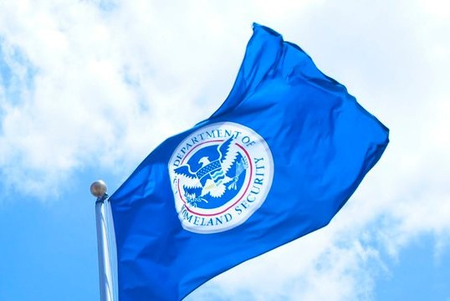
Judge F. Dennis Saylor IV of the US District Court in Boston issued a nationwide preliminary injunction Monday, one day before the Department of Homeland Security rule was scheduled to take effect.
The regulation would have replaced the longstanding “duration of status” system, under which foreign students may remain in the United States while enrolled in an authorised academic programme.
Students needing more than four years would have been required to seek an extension from immigration authorities. The rule also restricted students’ ability to change programmes, transfer universities or pursue another degree at the same level without approval.
The changes would also have affected visiting scholars and foreign journalists.
Saylor called the government’s justification for the regulation “exceptionally weak.” He said the existing system had contributed to “groundbreaking research in science, medicine, and technology, substantial economic growth.”
If implemented, the restrictions could cause damage to the economy and higher-education institutions that “is likely to be catastrophic,” he wrote.
“Immigrants to the United States who attended American universities have been named as inventors on a disproportionate number of patents and have been awarded a disproportionate number of Nobel Prizes,” the judge said.
The government argued that the existing system was outdated and needed to be changed to “safeguard national security.”
Saylor acknowledged that the system was “not without its problems.” But he said the administration had sought to “substantially restrict the overall number of foreign students, researchers, professors, and journalists in the United States.”
“The government’s contention that the rule is necessary to safeguard national security borders on the absurd,” he wrote.
The case was brought by higher-education organisations and labour unions, including the Presidents’ Alliance on Higher Education and Immigration, NAFSA: Association of International Educators and the Association of Independent Colleges and Universities in Massachusetts.
The plaintiffs argued that the rule imposed an arbitrary deadline and would damage universities’ ability to attract international talent and produce advanced research.
The Department of Homeland Security had defended the policy after the lawsuit was filed.
“Where was the outrage when foreign nationals were abusing the system, violating the terms of their student visas, and making a mockery of our immigration laws?” a department spokesperson said at the time.
The rule was expected to affect doctoral students particularly severely. National Science Foundation data cited in the reports showed that doctoral programmes take a median of 5.7 years to complete.
Saylor also raised concerns about giving immigration officials greater control over academic decisions.
“Moreover, it is not difficult to imagine how that system might be abused to punish those whose viewpoints or research are disfavored by the officials making the decision — or, indeed, punish disfavored institutions,” he wrote.
Nearly 22,000 public comments were submitted on the regulation, with most expressing opposition. The next court hearing is scheduled for October 2.
International applications through the Common Application have fallen 10 per cent during the latest admissions cycle, while doctoral applications have declined 21 per cent, according to figures cited by NAFSA.
The preliminary injunction does not permanently invalidate the regulation. It preserves the existing system while the court considers the case, and the administration may appeal the ruling.
–IANS
lkj/rs