
Traders raise alarm over protests during festive season, seek intervention from PM, CJI and Rahul Gandhi

New Delhi, Oct 14 (IANS) With the festive season underway, traders’ organisations have expressed concern that continued political protests by the Cockroach Janta Party (CJP) and the Congress in the national capital could disrupt business activities, restrict customers’ movement and cause substantial financial losses to traders who have stocked up goods for Navratri, Dussehra, Diwali and Chhath Puja.
Representatives of several traders’ associations have appealed to the Centre, political leaders and protest organisers to ensure that demonstrations do not adversely affect commercial activities, particularly during the peak festive shopping period.
They have sought the intervention of Prime Minister Narendra Modi, Chief Justice of India Justice Surya Kant and Congress MP Rahul Gandhi. Traders urged them to help find a solution that balances the right to protest with the right to conduct business.
Ajay Banarsi Das Gupta of the Vyapar Mandal said traders prepare throughout the year for the festive season, often taking bank loans and borrowing money to build up stocks in anticipation of higher sales.
He alleged that the protests being held by the Opposition, particularly those under Rahul Gandhi’s leadership, were creating an atmosphere that was discouraging customers from visiting markets. This was also affecting the movement of goods, supplies and the fulfilment of orders.
Pointing out that Delhi is one of the country’s major wholesale trading centres, Gupta said markets such as Sadar Bazar and Naya Bazar cater to traders from different parts of the country.
He expressed concern that traders from other cities were becoming apprehensive about visiting the national capital for purchases due to the prevailing situation. If the disruption continued, businesses could suffer losses over an extended period, he warned.
Gupta said traders had appealed to the Prime Minister to intervene and requested the Chief Justice of India to take cognisance of the situation. He clarified that traders were not opposed to protests but wanted demonstrators to choose locations that would not disrupt commercial activities.
Vikram Wadhwa, General Secretary of the New Trade Association, Connaught Place, also appealed to the government and protesters to ensure that demonstrations were held at locations where businesses remained unaffected.
He said shopkeepers had already invested heavily in stocking goods for the festive season and would face a double financial burden if sales remained sluggish, as shop-related expenses would continue despite reduced earnings.
Wadhwa pointed out that the government, too, could suffer revenue losses as GST collections from goods depend on their sale. “Just as protesting is people’s right, conducting business is also the right of traders,” he said.
Vinod Srivastava, Vice President of the Mohan Singh Palace Association, urged all political parties to consider the impact of protests on traders’ livelihoods.
He said a trader not only supports his family but also provides employment to around 10 people and has to meet recurring expenses such as salaries, electricity, water and maintenance. Road closures around protest sites in Delhi had made it difficult for customers to reach shops, he added.
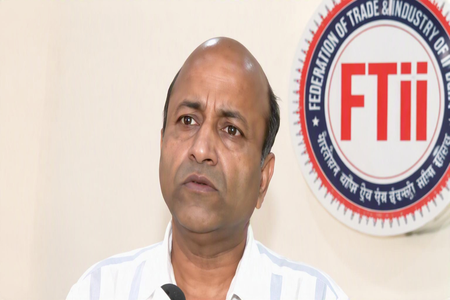
Meanwhile, Sanjay Bansal, National President of the Federation of Trade and Industry of India (FTII), expressed concern over the potential impact of the protests on the economy and trade amid challenging global economic conditions.
Speaking in Jammu, Bansal questioned who was attempting to create instability and anarchy in the country and called for an investigation into the matter.
He appealed to the Leader of the Opposition in the Lok Sabha, Rahul Gandhi, to either end the ongoing Opposition protests in Delhi or change their format, saying the festive season was crucial for traders across the country.
Bansal said traders from different states visit Delhi during this period to purchase goods, which are subsequently supplied to markets across the country. Crores of rupees worth of merchandise had already been stocked in shops and warehouses, but the prevailing situation was affecting the movement of outstation traders.
He warned that many traders were already under pressure to repay bank loans and could face difficulties if their stocks remained unsold. Prolonged business disruption could also affect their bank accounts and increase financial risks for lending institutions.
Suggesting an alternative, Bansal said venues such as Ramlila Maidan were available for protesters to peacefully raise their demands without affecting commercial activities.
He said he had written to Rahul Gandhi and subsequently sent letters to the Prime Minister and the Chief Justice of India, seeking their intervention.
Bansal cautioned that small and medium traders would find it particularly difficult to withstand prolonged disruptions, adding that unsold stocks could severely damage their financial position and have wider implications for the economy.
–IANS
brt/uk