
TN BJP chief seeks fast-track river linking projects to tackle water scarcity

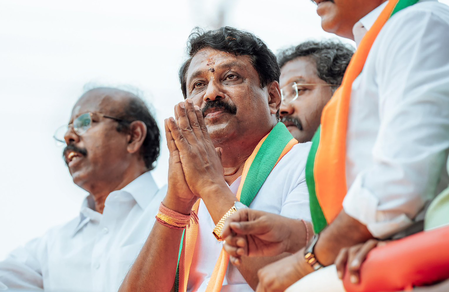
Chennai, May 30 (IANS) Tamil Nadu Bharatiya Janata Party (BJP) president Nainar Nagenthran on Saturday renewed his party’s call for the speedy implementation of river-linking projects across India.
He asserted that interconnecting major river systems is critical to addressing the country’s growing water crisis and ensuring equitable distribution of water resources among states.
In a statement, Nagenthran highlighted the importance of the Ken-Betwa River Linking Project, a flagship initiative to transfer surplus water from the Ken River in Madhya Pradesh to the drought-prone Betwa basin in Uttar Pradesh.
He described the project as a significant example of how states can work together to optimise water resources and meet the needs of regions facing chronic shortages.
“The interlinking of rivers is no longer merely an option but a necessity for the country’s future. Every state, including Tamil Nadu, should extend wholehearted support to such projects in the larger national interest,” he said.
Nagenthran noted that Prime Minister Narendra Modi has consistently advocated for the balanced and efficient utilisation of water resources across India. According to him, PM Modi has repeatedly stressed the need to ensure that water reaches regions experiencing scarcity, thereby strengthening agricultural productivity, industrial growth, and drinking water security.
Drawing attention to PM Modi’s tenure as Chief Minister of Gujarat, Nagenthran said the successful expansion of the Narmada river water distribution network had demonstrated how large-scale water management initiatives could transform drought-affected regions and improve livelihoods.
The BJP leader also traced the origins of the national river-linking vision to the government led by former Prime Minister Atal Bihari Vajpayee. He recalled that the ambitious proposal envisaged connecting several major river systems, including the Mahanadi, Krishna, Pennar, Cauvery, Vaigai, and Tamirabarani, as well as linking the Ganga and Brahmaputra basins to facilitate a more balanced water distribution across the country.
Referring to legal and administrative hurdles that have delayed such projects, Nagenthran said decades of litigation and policy debates had eventually led to judicial support for advancing river-linking initiatives.
He added that the Modi government had subsequently taken steps to advance projects aimed at improving water availability for agriculture, industry, and domestic consumption.
Emphasising Tamil Nadu’s vulnerability to water shortages, Nagenthran noted that the state depends heavily on rivers that originate outside its borders. He argued that ensuring long-term water security would require sustained investments in water-sharing infrastructure and greater inter-state cooperation.
“River-linking projects must be treated as an urgent national priority. They hold the key to addressing recurring droughts, improving agricultural resilience and securing water resources for future generations,” he added.
–IANS
aal/dan