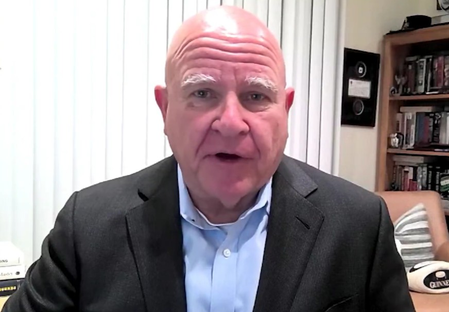
Washington, April 22 (IANS) Former US National Security Advisor (NSA) H.R. McMaster has underscored the urgency of strengthening US-India energy cooperation, saying that current global tensions highlight India’s need for long-term energy security.
McMaster, who served as the national security advisor to President Donald Trump in his first term, said the energy crisis in the aftermath of the Iran war situation mirrors earlier disruptions during the Ukraine war.
“This is very similar to the energy crisis associated with Russia’s massive invasion of Ukraine,” he told IANS in an exclusive interview.
Cautioning that reliance on external energy sources leaves India vulnerable to geopolitical volatility, he said: “It highlights the need for energy security.”
McMaster identified the US-India partnership as central to addressing these risks. “The US partnership with India is immensely important on so many levels,” he said.
He stressed that energy cooperation must become a core pillar of bilateral ties. “One of the most important dimensions… should be a partnership… to develop technologies… that will allow for a much higher degree of energy security,” he said.
The former NSA also linked energy challenges to broader domestic pressures in India. “Water security and food security… I see these as all interconnected,” he said.
Outlining practical steps, McMaster pointed to expanding access to American energy supplies. “Access to US liquified natural gas exports,” he said, could help India diversify its import basket.
He noted that the United States has emerged as a dominant energy producer. “The US… is now the world’s largest producer of fossil fuels,” he said.
At the same time, he warned against overdependence on supply chains linked to China. “Renewable solutions that are not reliant on supply chains controlled by China,” he said, should be prioritised.
He cited sectors such as solar panels and wind turbines, where Chinese dominance in manufacturing creates strategic vulnerabilities.
Looking ahead, McMaster highlighted advanced nuclear technologies as part of a long-term solution. “Nuclear technologies… such as small modular reactors… hold great promise,” he said.
He argued that a diversified energy strategy — combining fossil fuels, renewables and nuclear — would strengthen India’s resilience against external shocks.
The remarks come as India continues to navigate global uncertainty, including tensions in West Asia and fluctuating energy markets, while seeking to balance growth with stability.
McMaster’s comments underline a broader strategic view in Washington that energy cooperation can anchor the next phase of US-India relations, alongside defence and technology partnerships.
–IANS
lkj/sd/