

New Delhi, Oct 12 (IANS) After weeks of weighing options, Pakistan Army chief Asim Munir appears to have decided to honour the Makkah Joint Defence Agreement and join Saudi Arabia in fighting the Houthis, but the latter’s reported warning now poses a dilemma for him, with several records of conflicts having begun as limited confrontations, proxy campaigns, or coercive demonstrations later evolving into full-scale wars.
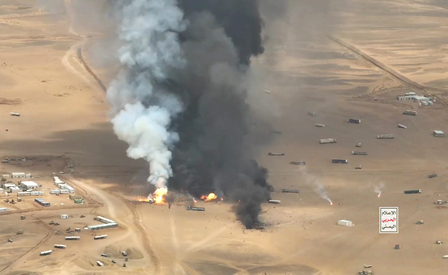
The conflict between Yemen’s Houthi movement and Riyadh has intensified, with raids and missile attacks increasingly threatening Saudi Arabia’s territory, energy infrastructure, and key Red Sea shipping routes.
While reports last week said the Pakistan military confirmed deployment of forces to Saudi Arabia under the Mecca pact, Yemen’s Houthi leadership has apparently warned Islamabad against military involvement on Riyadh’s behalf, threatening “severe retaliation”.
Field Marshal Munir had been dithering on a direct confrontation in a delicate balancing act.
On the one hand, Saudi Arabia is a longstanding strategic and economic partner; on the other, Pakistan’s immediate neighbour Iran retains influence with the Houthis.
The Pakistani Army chief is said to be still pursuing diplomatic engagement with Tehran to help restrain the Houthis and reduce risks to Saudi energy facilities, highlighting Pakistan’s effort to avoid being drawn into a wider regional war while maintaining its alliance commitments.
History is filled with intended “short” conflicts that evolved into full-scale wars.
The Korean War is said to have begun in June 1950 as a rapid offensive, but drew in the United States, China, the then Soviet Union, and others. A conflict expected to be swift became a three-year bloodbath with millions of casualties.
Similarly, the Vietnam War evolved from advisory missions, small deployments, and limited military commitments into one of the largest wars of the Cold War era. The then-American policymakers reportedly believed that incremental escalation could preserve strategic flexibility. Instead, each step created pressure for another, until withdrawal became politically and militarily costly.
In Afghanistan, the decade-long Soviet occupation in the 1980s, or US-led forces’ presence between 2001 and 2021 in its war against terror, ended abruptly with huge losses of life and finance. Even the British Raj had realised that capturing Kabul did not ensure ruling the country.
More recently, the Russia-Ukraine war, or even the US-Iran conflict, offers a different version of the same phenomenon where initial expectations of a short campaign gave way to a prolonged war that imposed severe military, economic, and diplomatic costs. Such, and more, historical lessons may now be weighing heavily on the mind of Munir as Islamabad navigates an increasingly dangerous regional crisis and wider security implications.
Analysts note that Islamabad is attempting to balance its defence commitments to Riyadh with its need to maintain working ties with neighbouring Iran.
Munir has reportedly engaged Iran diplomatically, urging Tehran to use its influence to restrain the Houthis and reduce threats to Saudi energy infrastructure and shipping routes.
Pakistan’s Defence Minister Khawaja Asif’s assertion of “a supporting role”, largely with reconnaissance and similar support, has been questioned by analysts on whether Islamabad is really still not involved in direct conflict, and if so, how long can it stay out?
As evident from earlier incidents, limited commitments rarely remain thus.
A deployment intended to reassure an ally can become a combat mission. Air defence assistance can evolve into retaliation. And retaliation can create a severe counter-offensive.
Against the backdrop, the Houthis’ warning is being seen as raising the perceived cost of Pakistani intervention and deterring Islamabad from crossing the threshold from diplomatic support to military participation, as the Makkah Treaty envisages. For Islamabad, the calculation is particularly delicate, where Saudi Arabia remains an important economic and strategic partner, while a direct military role could strain relations with Tehran, expose Pakistani personnel and assets to attack, and create domestic political complications.
–IANS
jb/vd