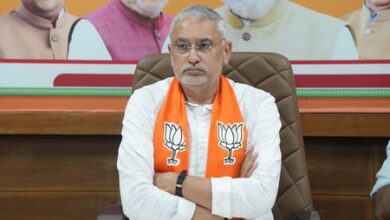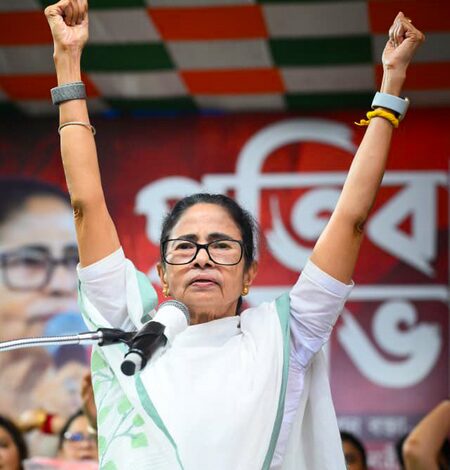
Kolkata, March 18 (IANS) Of the 294 Assembly constituencies in West Bengal that will go to the polls in two phases next month, the spotlight is firmly on the Bhabanipur Assembly constituency, where a direct contest between Chief Minister Mamata Banerjee and Leader of the Opposition Suvendu Adhikari has turned the seat into a high-stakes battle.
Adhikari is also contesting simultaneously from the Nandigram Assembly constituency in East Midnapore district, where he has been a two-time legislator — first for the Trinamool Congress from 2016 to 2021 and then for the Bharatiya Janata Party (BJP) from 2021 onwards.
One of the key factors that makes this contest particularly significant is the community-wise voter distribution in Bhabanipur, a post-delimitation constituency formed in 2011 by merging the erstwhile Alipore Assembly constituency with parts of the Chowrangee Assembly constituency in south Kolkata.
As per the voter profile, around 76 per cent of the electorate comprises Hindus, of which about 42 per cent are Bengali-speaking and 34 per cent non-Bengali-speaking. Minority voters, mostly Muslims, constitute around 24 per cent.
The Trinamool Congress’s victories in Bhabanipur in recent elections have largely been attributed to near-total support from minority voters and substantial backing from Bengali-speaking Hindus, while a significant section of non-Bengali-speaking Hindu voters has traditionally leaned towards the BJP.
The Left parties have historically been a weak force in this constituency, even during the 34-year Left Front rule in West Bengal from 1977 to 2011. Prior to the emergence of the Trinamool Congress, the area was considered a Congress stronghold.
However, since the 2014 Lok Sabha elections, the BJP has emerged as a significant player in Bhabanipur, which comprises eight wards of the Kolkata Municipal Corporation (KMC) — 63, 70, 71, 72, 73, 74, 77 and 82 — consistently securing notable vote shares in six of these wards, except those with a majority Muslim population.
In the 2024 Lok Sabha elections, although Trinamool Congress candidate Mala Roy was re-elected from Kolkata (Dakshin), she trailed in a majority of the KMC wards in Bhabanipur as well as in the adjacent Rashbehari constituency.
In 2024, the Trinamool Congress also trailed in KMC Ward 73, where Chief Minister Mamata Banerjee and party general secretary Abhishek Banerjee are registered voters.
In this backdrop, the impact of the Special Intensive Revision (SIR) has further complicated the electoral scenario for the Trinamool Congress and the Chief Minister. As many as 47,111 voters have already been deleted from the constituency in the final electoral roll published on February 28, while another 14,154 voters are currently under judicial adjudication after being flagged under the “logical discrepancy” category.
According to data available from the office of the Chief Electoral Officer (CEO), West Bengal, a majority of the deleted voters and those under adjudication are from the two wards that have traditionally delivered significant leads to the Trinamool Congress.
In such a situation, the BJP’s decision to field Adhikari against the Chief Minister is seen as a tactical move, potentially restricting her campaign mobility within the constituency and limiting her ability to campaign extensively across the state.
This is the second direct contest between the two leaders. In 2021, Adhikari defeated Banerjee in Nandigram. Banerjee later won from Bhabanipur in a by-election, enabling her to continue as Chief Minister for a third consecutive term.
–IANS
src/pgh