
SEBI caps rupee currency derivatives positions at $5 million without underlying exposure

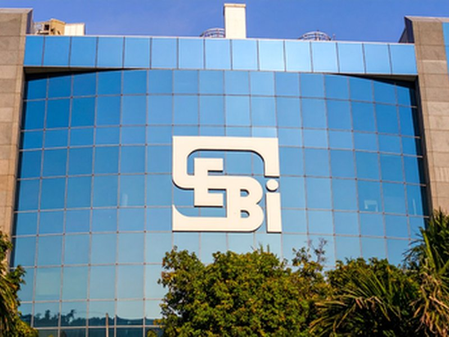
Mumbai, Nov 5 (IANS) The Securities and Exchange Board of India (SEBI) on Thursday introduced a uniform $5 million limit on outstanding positions in rupee-related currency derivatives that domestic investors and foreign portfolio investors (FPIs) can hold without establishing an underlying exposure, in a move aimed at aligning market regulations with the Reserve Bank of India (RBI)’s revised foreign exchange derivatives framework.
In a circular, the market regulator revised the position limits applicable to currency derivatives, replacing the earlier contract-specific approach with a single aggregate threshold across all rupee-related currency pairs and recognised stock exchanges.
Under the revised framework, domestic clients and FPIs can hold long or short positions of up to $5 million in notional value, outstanding at any point in time, across all currency pairs involving the Indian rupee without the need to demonstrate an underlying exposure.
Such exposure typically refers to actual financial obligations or investments, including foreign currency receivables, payables or hedging requirements.
The changes follow the RBI’s October 10 revision of rules governing foreign exchange derivatives involving the rupee and are intended to harmonise regulatory provisions between the central bank and the capital markets regulator.
For FPIs, the new norms stipulate that aggregate short positions across foreign currency-rupee contracts cannot exceed $5 million without underlying exposure. However, FPIs seeking to take long positions beyond the prescribed threshold will be required to establish underlying exposure in Indian debt or equity instruments, including units of debt and equity mutual funds.
Domestic investors will be permitted to take positions exceeding the $5 million limit, subject to conditions laid down under the RBI’s Master Direction on Risk Management and Inter-Bank Dealings and subsequent circulars governing currency risk management.
Market participants typically use currency derivatives to hedge exchange-rate risks arising from trade and investment activities.
For example, importers facing future foreign currency payment obligations and exporters expecting overseas receivables often use such instruments to protect themselves from currency fluctuations.
SEBI said the revised provisions supersede the relevant threshold limits prescribed under its Master Circular for Stock Exchanges and Clearing Corporations issued in December 2024, while all other provisions of the earlier framework will continue to remain in force unless specifically modified.
–IANS
pk