SAI national centres of excellence continue to drive India’s Olympic medal aspirations

New Delhi, March 16 (IANS) As India steadily advances in its pursuit of hosting the 2036 Olympics, the Sports Authority of India (SAI) is expanding its athlete development system to boost the country’s medal prospects in upcoming major events.
At National Centres of Excellence (NCOEs) and many SAI Training Centres (STCs), a new wave of athletes is advancing from grassroots programs to international podiums. As the number of these centres, academies, and institutions continues to grow, developing future champions becomes an ongoing and streamlined process.
Launched in 2019, the NCOE model was designed as an ‘athlete-centric, coach-driven’ high-performance ecosystem, integrating Sports Science, High-Performance Directors, and an Athlete Management System into daily training routines. NCOEs accommodate over 4,000 athletes, representing the top tier of a broader pyramid that also includes STCs, which have nearly 4,800 trainees.
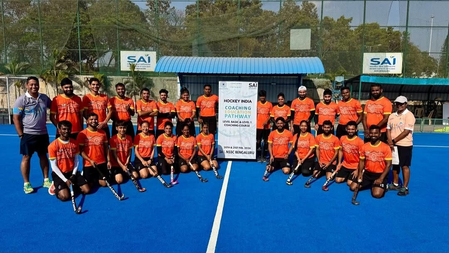
The number of lesser-known achievers quietly raising the tricolour in major international arenas through their performances is steadily growing. SAI Regional Centre (RC) Bhopal trainees Mohith HS and Chandura Boby Poovanna contributed to India’s silver medal at the Sultan Azlan Shah Cup. This showcases India’s increasing trust in rotating talent and strengthening its bench.
This institutional footprint is even more evident in boxing. From RC Sonepat to Guwahati and Aurangabad, NCOE boxers are leading at national and international competitions. At the 2025 World Boxing Cup Finals, Minakshi won gold, Saweety won bronze, and Abhinash Jamwal and Naveen both won silver medals.
Disha Patil from SAI Aurangabad represented India at the Boxam Tournament in Spain. Mayuresh Jadhav participated in a training and competition program in Ireland. Meanwhile, Lovlina Borgohain, an Olympic medalist training at SAI Guwahati, enhanced the team’s success by winning gold at the Boxam Elite International 2026.
The expansion of para sport remains a key focus. The SAI NCOE in Gandhinagar has grown over time into a top pipeline for para sports talent. At the 2025 Brazil Open Championship, para powerlifter Jaspreet Kaur won a silver medal. Additionally, in February 2026, centre participants performed exceptionally well at the ITTF World Para Future in Australia, earning two golds, two silvers, and three bronzes. Subham Wadhwa secured singles gold and achieved two more podium finishes. Prachi Pandey, Savita Ajjanakatti, and Rishit Nathwani contributed to the medal tally across various categories.
The momentum has remained steady across various events and regions. At the 2025 Para Youth Asian Games in Gandhinagar, athletes won medals in swimming, powerlifting, table tennis, and athletics, with Nathwani earning a gold, silver, and bronze. The centre’s strength was further demonstrated at the Fazza International Para Athletics Grand Prix in February 2026, where its team secured multiple gold medals in shot put, discus, javelin, and track events.
SAI NCOEs are not just creating domestic champions; they are also maintaining worldwide competitiveness. The consistent outcomes highlight the importance of systematic training, international experience, and a focus on sports science support to empower both athletes and coaches equally.
The achievers come from diverse sports backgrounds. In athletics, Abinaya Rajarajan from SAI Trivandrum participated in the 12th Asian Indoor Championships in Tianjin. Even in sports like wushu, athletes such as Namrata Batra from SAI Itanagar have risen in Asian rankings, showcasing the geographic and sporting diversity within the SAI network.
SAI RC Lucknow’s Muskan secured a bronze medal at the Youth Asian Taekwondo Para Games 2025. Meanwhile, Gouri Nanda K from RC Trivandrum took home gold at the Ballarat International Regatta in Australia. Teenage cyclists representing SAI RC Trivandrum also achieved notable success at the Track Asia Cup 2026. Keerthi Rangaswami C won three silver medals, and Niraimathi J, Pooja Swetha, Dhanyadha JP, Srimathi J, Shweta Gunjal, and Kishore N all contributed to multiple podium finishes.
The structure supporting these accomplishments is multi-tiered. NCOEs serve athletes of various ages, aiming to prepare them for the Olympics. Meanwhile, STCs and the National Sports Talent Contest (NSTC) identify and develop talent starting from age eight. The role of High Performance Directors, combined with integrated sports science and updated financial regulations, further enhances athlete development to align with international standards.
As these young athletes move from SAI NCOE setups to international competitions, they continue to exemplify how India’s Olympic ambitions are built step by step—through individual athletes, medals, and teams. The NCOEs have established tiered talent pipelines, with junior squads advancing into senior national camps and progress monitored centrally. The framework is based on three main pillars: early talent recognition, ongoing high-performance training, and comparison with international standards.
Under this scheme, athletes receive residential training, educational support, integration with sports science, and competition opportunities at no cost. Notably, performance monitoring is data-driven, with each athlete’s progress aligned with international standards to prevent stagnation. Additionally, facilities such as synthetic turfs, recovery pools, high-performance gyms, and advanced analytics suites are now common features.
India is expanding its talent pool by decentralising excellence and establishing centres across various regions. This move gives young athletes from rural areas access to facilities that were previously available only in major cities. As India aims to host the 2036 Olympic Games, maintaining strong competitiveness in individual and team sports will be vital for both performance and fostering an energetic sporting environment.
For many years, Indian sports depended mainly on individual talent and occasional state-level achievements. The NCOE era marks a shift away from this approach.
–IANS
vi/