

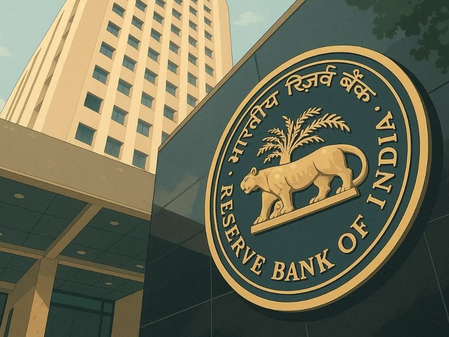
Mumbai, June 23 (IANS) The Reserve Bank of India (RBI) on Tuesday pumped in over Rs 1.41 lakh crore of transient liquidity into the banking system through a seven-day variable rate repo (VRR) auction.
The funds were injected into the system at a cut-off rate and weighted average rate of 5.26 per cent, according to figures released by the RBI.
This was done after the liquidity in the banking system turned into a deficit of Rs 19,971.89 crore as on June 22, from a surplus of Rs 30,685.11 crore as on June 21.
Analysts said that the outflow of money from banks due to goods and services tax (GST) payments had led to the tightening of liquidity in the system.
The decline in liquidity had brought overnight money market rates under pressure, with weighted average call money rate trading at 5.43 per cent, which is 0.18 per cent above the RBI’s repo rate.
If banking liquidity tightens excessively due to events like Goods and Services Tax (GST) outflows, short-term money market rates (such as the weighted average call money rate) can push above the RBI’s standard repo rate.
By stepping in with liquidity injections, the RBI ensures that short-term funding pressures ease and credit continues to flow smoothly across the financial system without triggering economic slowdowns.
RBI routinely injects transient and durable liquidity into the banking system to manage short-term deficits caused by tax outflows, advance tax payments, or seasonal credit demand. The central bank achieves this through various monetary tools and market operations.
The RBI frequently conducts VRR auctions, including 3-day or 7-day tenors, to infuse substantial transient liquidity into the banking system.
Banks pledge eligible government securities to borrow funds directly from the central bank, providing immediate relief when liquidity slips into deficit.
To inject durable liquidity into the system, the RBI purchases government securities from the secondary market. This permanently adds cash into the banking system, allowing banks to easily meet their Cash Reserve Ratio (CRR) requirements.
The central bank can execute USD-INR swap auctions.
For example, the RBI might temporarily buy US dollars from commercial banks in exchange for rupees, directly increasing the rupee supply in the money market and preventing overnight interest rates from spiking.
–IANS
sps/ag