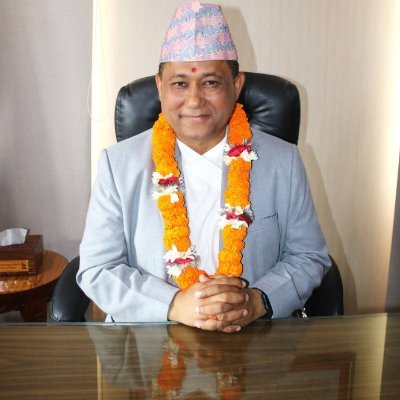
Kathmandu, April 13 (IANS) Nepal’s Foreign Minister Shisir Khanal on Monday suggested that it could take some time for Prime Minister Balendra Shah to visit India, though he has already received an invitation from the Indian Prime Minister Narendra Modi to visit the southern neighbour.
There is a long tradition of Nepali Prime Ministers making India their first foreign visit, although this practice has occasionally been broken due to various factors, including periods when relations between the two countries were strained.
Upon arriving in Nepal after participating in the Ninth Indian Ocean Conference (IOC) held in Mauritius on Monday, Minister Khanal said he had received an invitation for Prime Minister Shah’s visit to New Delhi from the Indian External Affairs Minister S. Jaishankar, and that the invitation had been accepted by the Nepali premier.
“The new government has just been formed, and it will set its priorities first. Several technical mechanisms between the two sides will also work on the agenda to be discussed,” Nepali Foreign Minister added.
“There are around 40 bilateral mechanisms between the two sides that deal with different aspects of bilateral relations. Once they complete technical preparations, the political visit of Prime Minister Shah will take place.”
The bilateral mechanisms range from the district level to the Foreign Ministerial level, covering security, water resources, irrigation, border management, boundary issues, trade, commerce, and agriculture, among other areas.
Officials of the two countries involved in some of these mechanisms meet regularly, while there has been no meetings of many other mechanisms.
India is also one of Nepal’s leading development partners.
In the fiscal year 2024–25, India emerged as the largest bilateral donor to Nepal, disbursing $107.8 million.
Several development projects built with Indian assistance have been completed, while others are under construction.
During the Indian Ocean Conference, Foreign Minister Khanal highlighted the issue of climate change and its impact on the Himalayan region and the seas.
“The health of the mountains and the health of the ocean are inseparable,” he said, noting that the Hindu Kush Himalaya region serves as the primary source of fresh water for billions of people.
Stressing that the Indian Ocean is central to global trade and energy flows, the Nepali Foreign Minister noted that its stability is therefore a global responsibility.
He also said that Nepal is deeply concerned by threats such as maritime terrorism, piracy, and illicit trafficking of drugs and human beings.
“The Indian Ocean is central to global trade and energy flows. Its stability is therefore a global responsibility,” Minister Khanal said.
“Nepal is deeply concerned by threats such as maritime terrorism, piracy, and illicit trafficking of drugs and human beings. These challenges affect real lives, including those of Nepali citizens who travel across these waters in pursuit of livelihoods.”
He also emphasised that the Hindu Kush Himalaya region serves as the primary source of fresh water for billions of people.
The glaciers and snowfields of Nepal feed major river systems that ultimately discharge into the Indian Ocean. Therefore, the health of the mountains and the health of the ocean are inseparable.
The Ninth Indian Ocean Conference (IOC) was organised by India’s Ministry of External Affairs, the Mauritius government, and the India Foundation.
–IANS
int/scor/khz