Pakistan’s military grip runs deep from politics to civilian institutions: Report

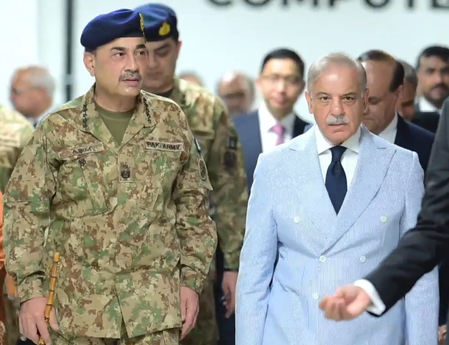
Islamabad, Sep 25 (IANS) The Pakistani military’s influence extends well beyond the security establishment, with parallel institutions and its personnel embedded in the civil bureaucracy and federal cabinet. Its reach also runs deep into the country’s economic and social spheres, while major foreign-policy decisions require its approval, a report has stated.
The irony of Pakistan’s democracy is that Prime Ministers often find themselves in trouble when they try to act as the country’s true chief executives. Several premiers have made that mistake and faced serious repercussions after challenging the entrenched balance of power, a report in the Union of Catholic Asian (UCA) News highlighted.
“The prolonged incarceration of Pakistan’s former Prime Minister Imran Khan and denial of access to the hospital of his choice for medical treatment might have surprised many, but for those familiar with Pakistan’s political dynamics, it is not a new story. This is not the first time that a politician has been treated in this way, but in reality, the registration of concocted cases against politicians, throwing them behind bars, and putting restrictions on their media appearances are some of the tactics that the country’s powerful military has been employing for years now,” the report detailed.
It noted that during Pakistan’s first two decades, more than six Prime Ministers were forced to leave office before completing their terms, while no premier managed to serve a full five-year constitutional tenure.
Over the years, Pakistan’s military has seen civilian governments create institutions that have served the former’s interests. The National Accountability Bureau (NAB), an anti-corruption watchdog, has been used to target politicians, bureaucrats and business figures. At the provincial level, the Counter Terrorism Department is believed to be acting in line with the military’s interests, the UCA news mentioned.
“The federal information ministry is heavily influenced by the military’s media wing, the Inter-Services Public Relations, which also covertly controls media houses, punishing those that do not fall in line. Almost all political parties in Pakistan now have figures in them that are widely considered to have links with the military establishment. They can be forced to leave their party at any time at the will of the army,” the report stated.
“Military officers have also been appointed to civilian institutions, raising concerns about the extent of military influence over civilian administration. Critics have further raised concerns about the military and intelligence agencies’ access to state data and their ability to monitor political opponents and critics,” it added.
–IANS
scor/as