
Pakistan’s hunger crisis grew through years of neglected warnings, delayed decisions: Report

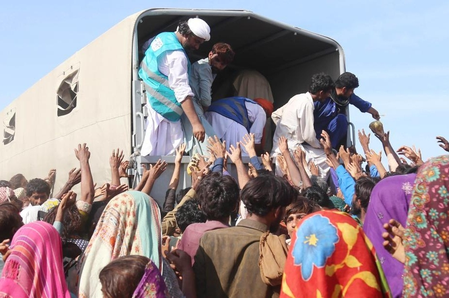
Islamabad, Oct 25 (IANS) The hunger crisis in Pakistan increased slowly through years of delayed decisions, neglected warnings, and difficult discussions left unresolved, a report said, noting that the latest Global Hunger Index 2026 was reported in the media, the usual concern expressed, and then the report added to several others which Pakistan acknowledges but never makes any effort to address.
Pakistan has been ranked second-worst in South Asia on the Global Hunger Index (GHI) 2026 with a score of 25.5, trailing only Afghanistan, showcasing the country’s deteriorating food insecurity and malnutrition challenges. It was only behind Afghanistan, which had a score of 28.6 on the GHI. Pakistan was placed at the 106th position out of 122 countries globally on the GHI.
“Pakistan has never suffered from a shortage of diagnoses. Reports, assessments, alerts, cautions and recommendations emerge with remarkable regularity. Researchers write them, international organisations publish them, development agencies fund them and public institutions acknowledge them. Yet somewhere between diagnosis and action, urgency evaporates. Problems that could have been addressed when they were manageable are allowed to mature into crises,” Zishan Ahmad Siddiqi said in the report in The Friday Times.
Poverty, poor learning outcomes, weak healthcare systems, child labour, food insecurity, environmental degradation and unemployment did not emerge in Pakistan unexpectedly. Instead, they remained in Pakistan for years, growing slowly while governments changed, committees were established, plans were initiated, and fresh studies were conducted to explain what earlier studies had already explained. Part of the response lies in the habit of avoiding difficult discussions until circumstances leave the people in Pakistan with no option but to deal with them, according to The Friday Times report.
“Our hunger crisis did not arrive unannounced. It grew in the space created by problems we identified but failed to address, warnings we acknowledged but failed to heed, and realities we preferred not to examine too closely. Nations rarely fail because they cannot diagnose their problems. More often, they struggle because they continue diagnosing the same problems for decades while postponing the remedies,” Siddiqi wrote.
“Pakistan’s hunger crisis is therefore not merely a story about food. It is a story about governance, accountability, priorities and choices. Above all, it is a story about a problem we should have seen long ago, but somehow failed to see until it had grown too large to ignore,” he added.
The GHI score of Pakistan is based on four components: child stunting, undernourishment, child wasting and child mortality. The report said that 16.1 per cent of Pakistan’s population is malnourished while 33.6 per cent of its children aged below five years are stunted, Pakistan-based Geo News reported. According to the report, 9.8 per cent of the children in Pakistan are wasted, while 5.6 per cent of the children die before the age of five years.
–IANS
akl/vd