
Pakistan’s groundwater crisis driven by governance failures and policy paralysis

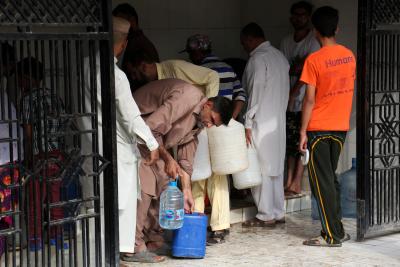
Islamabad, Sep 18 (IANS) The groundwater crisis in Pakistan is caused by governance failures and policy paralysis instead of physical water scarcity. In addition to ineffective policies, division of responsibilities among government departments has caused regulatory gaps in Pakistan, leading to lack of accountability and failure in providing sufficient water to people.
Pakistan has been blaming India, climate change and population increase for the water crisis. But, the real causes of the water scarcity in Pakistan are distorted policies, mismanagement, uneven distribution of water among provinces, theft and corruption, according to a report in the European Times.
Despite having a huge network of big rivers and groundwater reserves, Pakistan has been facing water scarcity. Unequal canal distribution, inefficient irrigation, uncontrolled groundwater extraction, poor investment and institutional failure have turned the resource-management problem into a water crisis in Pakistan.
After India placed the Indus Water Treaty (IWT) in abeyance following the last year’s heinous terrorist attack in Jammu and Kashmir’s Pahalgam, until Pakistan credibly and irrevocably abjures its support for cross-border terrorism, Pakistani lawmakers have made it an excuse to hide their failures and hold New Delhi responsible for the water crisis.
“No governments in Pakistan have ever attempted to address these problems, leaving the country with low agricultural water productivity, dilapidated and outdated canal system, severe groundwater depletion, and weak enforcement. India cannot be blamed for those failures,” the report mentioned.
Pakistan has not built even one major reservoir in the past five decades to store water. Pakistan has not made efforts for efficient management of water that it gets through rivers or to stop groundwater depletion. Over 1.5 million tube wells have resulted in uncontrolled pumping in Pakistan. Subsidised electricity and power theft have further intensified the problem.
“Notably, the government of Pakistan is well aware of the problem and has at times underlined the need to bring in necessary reforms. But it has failed to act. Pakistan’s groundwater crisis is due to governance failures and policy paralysis rather than physical water scarcity. Besides policy distortions, fragmented responsibilities among different government departments have created regulatory gaps, deprived the ecosystem of accountability and sustainability and a promise of adequate water,” the European Times report stated.
In July, Quetta, the capital and largest city of Pakistan’s Balochistan province, was facing a severe water crisis with groundwater levels dropping to dangerously low levels and official supplies from the Water and Sanitation Agency (WASA) either completely stopped or severely restricted in many residential areas, Pakistan-based daily The Express Tribune reported.
Residents of areas, including Sariab, Sirki Road, Samungli Road, Jinnah Town, Qambarani Road, Satellite Town, Sabzal Road, and Khayaban-e-Agha, were facing problems due to the water shortage. Elderly people, women and young children in Quetta were forced to travel long distances on foot to fetch water, The Express Tribune reported.
Many houses in Quetta had received no tap water for the past six months, severely affecting their routine life. Speaking to The Express Tribune, residents of Quetta said that they don’t receive water despite paying their WASA bills regularly. The issue has not been resolved despite multiple complaints from residents, with officials only providing verbal assurances.
–IANS
akl/as