Pakistan’s elite accused of corruption, stashing wealth overseas: Report

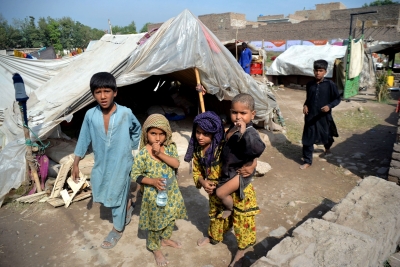
New Delhi, Nov 18 (IANS) Pakistan’s worsening economic crisis has exposed a growing divide between ordinary citizens and the country’s powerful ruling elite. While hundreds of thousands of poor Pakistanis are leaving the country in search of jobs, members of the political establishment, senior bureaucrats and military-linked figures are facing allegations of accumulating wealth and securing safe havens overseas, according to a new report.
The report from Thailand’s Page 3 News also raises serious concerns over corruption, military influence, political mismanagement and the alleged misuse of the country’s natural resources.
Imran Khurshid, Associate Research Fellow at the Centre for Peace Studies, argues that these interconnected problems have weakened state institutions, undermined public resources and brought Pakistan closer to a major national crisis.
The report cites official figures presented in Pakistan’s Parliament which reveal that more than 317,000 citizens left the country for employment during the first half of 2026.
The scale of migration is even more striking over a longer period. More than 1.87 million Pakistanis reportedly moved abroad between 2024 and 2026, highlighting the country’s shrinking employment opportunities and the growing desperation among citizens seeking financial stability and a better future, said the report.
The report, citing federal audit figures released on October 5, claims that over 2,500 serving federal government officials hold dual nationality. Hundreds of senior bureaucrats have also been accused of concealing their overseas properties and financial interests.
Portugal is reportedly emerging as a preferred destination for influential members of Pakistan’s establishment looking to secure residency abroad. Investment-based residency programmes are said to be providing an avenue for wealthy and influential Pakistanis to establish a foothold in the European country.
Defence Minister Khawaja Asif has also raised concerns about government officials pursuing foreign citizenship while continuing to serve in public office. He questioned their loyalty and commitment to Pakistan, suggesting that some had systematically planned to secure foreign citizenship while remaining in government service.
The report identifies the military establishment as a major centre of political and economic power in Pakistan, alleging that its influence extends across several key sectors of the economy.
It further alleges that the military has effectively turned the country into a vast real estate enterprise, with significant control over land, property, and major commercial activities.
According to Khurshid, the military’s economic reach goes far beyond the property sector, extending increasingly into the exploitation of Pakistan’s natural resources.
The report raises concerns over the growing military involvement in the extraction of rare minerals and critical metals in Khyber Pakhtunkhwa.
It specifically points to the role of the Special Investment Facilitation Council (SIFC) and the Frontier Works Organisation (FWO) in facilitating the process under the military leadership of General Asim Munir.
According to the report, the military establishment exercises substantial control over the profits generated from the exploitation of these natural resources, while local communities receive only a fraction of the economic benefits.
The report further alleges that people living in resource-rich areas are bearing the environmental and health consequences of mining activities, including pollution and disease, without receiving a fair share of the wealth generated from their land.
The report argues that Pakistan’s troubles go well beyond economic instability. The growing migration of citizens, allegations of corruption among public officials, overseas wealth accumulation by influential figures and the military’s expanding economic footprint point to deeper structural problems.
–IANS
sps/na