Pakistan’s cyber fraud losses hit 2.5 pc of GDP, highest in Asia: Report

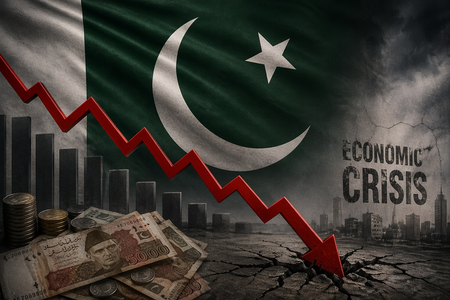
New Delhi, Oct 15 (IANS) Pakistan is facing some of the highest economic losses from cyber-enabled financial fraud in Asia with scams estimated to cost the country an amount equivalent to 2.5 per cent of gross domestic product (GDP), according to a report.
A report by Business Recorder — citing the International Monetary Fund (IMF) and World Bank Group (WBG) — showed an estimate that is significantly above the global average loss of 0.45 per cent of GDP.
It underscores mounting risks to digital financial services as fraudsters increasingly target online platforms, telecommunications networks and electronic payment systems, it added.
Asia accounts for the highest fraud-related losses globally with Pakistan recording losses equivalent to 2.5 per cent of GDP, following Malaysia of 2.1 per cent.
The report further draws on the anti-fraud experiences of Hong Kong, Malaysia, Singapore and Thailand.
It identifies coordinated intelligence-sharing, faster intervention mechanisms and stronger consumer protection measures as critical tools in combating increasingly sophisticated financial scams.
“Cyber-enabled fraud has evolved beyond unauthorised access to bank accounts with criminals increasingly manipulating customers into authorising transactions themselves through deception, impersonation and social engineering,” says Business Recorder.
It also highlights the growing use of artificial intelligence, deepfake technology and automated fraud services which are lowering the barriers for criminals to launch large-scale and highly convincing scams.
At the same time, instant payment systems enable illicit funds to be transferred rapidly across multiple accounts and jurisdictions, complicating recovery efforts.
“Digital finance has expanded access, innovation, and efficiency, but it has also enabled fraud to occur at greater speed, scale, and sophistication,” the report said.
It further noted that INTERPOL ranks it among the world’s most serious criminal threats alongside drug trafficking and money laundering.
–IANS
ag/