Pakistan’s conflict with Afghanistan designed to divert public attention from govt’s failure: Report

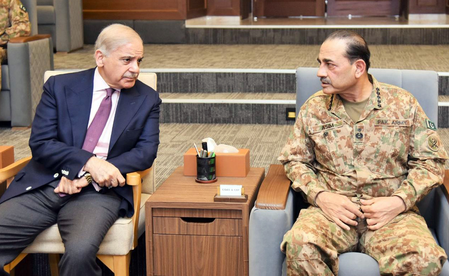
Kabul, March 13 (IANS) As Pakistan’s ongoing conflict with Afghanistan escalates, several critics have termed it as a deliberate ploy adopted by the country’s failed military to create instability in the region in order to divert attention of people from the fundamental failures of government, a report has stated.
Domestic opposition to Pakistan’s Army Chief Asim Munir is growing and increasingly visible. After the killing of civilians by security forces during local protests in Pakistan-occupied Gilgit Baltistan (PoGB), slogans of “Murdabad,” were directed at Pakistan Prime Minister Shehbaz Sharif and Munir, an article in Afghanistan’s leading news agency Khaama Press highlighted.
“On social media, hashtags such as ‘Resign Asim Munir,’ ‘Pakistan under military fascism,’ and ‘Boycott military businesses’ trend with regularity, with users documenting crackdowns and restrictions on freedom of expression. In Afghanistan, public anger over the Pakistani airstrikes has been equally pronounced, with demonstrators in multiple provinces taking to the streets to condemn what they described as state terrorism against a defenseless civilian population,” it stated.
“The military’s record over the past two years has been by any measure poor, and the active military conflict with Afghanistan has only deepened what critics describe as a deliberate strategy of manufactured instability, designed to divert public attention from the government’s more fundamental failures,” the author further stated.
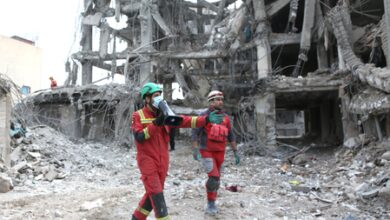
February has been ranked among the bloodiest months in Pakistan’s recent history due to failure of country’s own security apparatus. As many as 36 people were killed and 170 others injured in a suicide bombing at a Shia Mosque on February 6. The bombing occurred after a terror attack in Bajaur that claimed lives of 11 soldiers and bombings also took place in Bannu area of Khyber Pakhtunkhwa.
These incidents were part of a continuing pattern of security failures that have taken place under Munir’s leadership. Instead of addressing these failures, Pakistan military followed oldest institutional reflex in its playbook – manufacturing an external crisis to displace internal accountability, the report highlighted.
“Reports indicated that Pakistani authorities had received advance intelligence of an imminent threat yet failed to act. Critics argue the ongoing security crisis is a direct consequence of the military establishment’s longstanding support for jihadist groups, and that while Munir has sought to rhetorically rebrand certain militant outfits, he has simultaneously espoused inflammatory, racially charged rhetoric that reflects his own ideological leanings,” the article in Khaama Press elbaorated.
“On the night of February 21, the Pakistan Air Force conducted strikes across the Afghan provinces of Nangarhar, Paktika, and Khost, claiming to target Tehreek-e-Taliban Pakistan (TTP) and Islamic State Khorasan Province (ISKP) camps. What followed, however, was not a precision counterterrorism operation. It was a military institution performing strength for a domestic audience,” the author stated.
The current escalation showcases a shift in Pakistan’s approach towards more aggressive military operations in Afghanistan, what analysts have been reluctant to mention clearly is that the military launched those strikes as it could not give answers for its domestic failures. After the bombing in Islamabad, questions were raised over intelligence failure and the army’s preoccupation with managing civilian politics instead of fighting terrorism. Through the airstrikes, the establishment created a narrative, framing Pakistan as the aggrieved party fighting Afghanistan-based terrorism, instead of a failing security state not able to protect worshippers in Islamabad, located just 11 miles from Army headquarters in Rawalpindi.
–IANS
akl/as