
Pakistan needs to modernise agriculture sector to counter food insecurity: Report

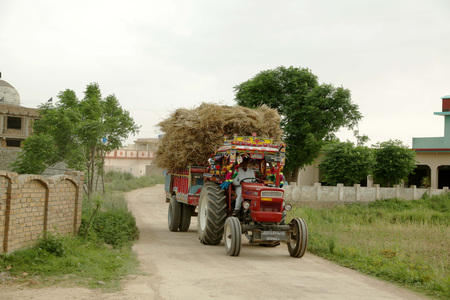
Islamabad, Oct 4 (IANS) Extreme heat in some parts of Pakistan has contributed to increased hydrological volatility, leading to falling water levels and crops being impacted, thus contributing to food insecurity amid the country’s growing population, further aggravating the situation, and necessitating the modernisation of its agriculture sector to counter the threat, according to a local media report.
Pakistan contributes around one per cent of global greenhouse gas emissions. However, it continues to remain highly vulnerable to global warming and climate change. More than 1.3 million hectares of farmland were flooded during the 2025 monsoon season, causing damage to rice, cotton, and sugarcane crops. Pakistan reported agricultural losses of $1.23 billion, according to a report in The Friday Times.
“Extreme heat in some parts of the country, attributed to climate change, has also contributed to increased hydrological volatility. As a result, crops are being affected while water levels continue to decline. All these factors are contributing to food insecurity. Pakistan’s population of 240 million, growing at a rate of 2.4 per cent, further aggravates the challenge of food insecurity,” Amna Ejaz Rafi said in the report.
By 2050, the population is projected to reach 300 million. To counter the threat of food insecurity, Pakistan needs to modernise its agricultural sector. During fiscal year 2025, Pakistan’s food import bill stood at $8 billion, and these imports place additional pressure on the country’s foreign exchange reserves, the author added.
Pakistan has been facing water scarcity and needs to construct new dams, which could allow rainwater to be stored and utilised during winter months. Rural households also face economic problems due to loss of livestock during floods and other extreme weather events. Around 22,800 farm animals died in Pakistan during the 2025 floods. Apart from disrupting livelihoods, extreme weather events also displace people from their homes, according to The Friday Times report.
In July, Quetta, the capital and largest city of Pakistan’s Balochistan province, was facing a severe water crisis, with groundwater levels dropping to dangerously low levels and official supplies from the Water and Sanitation Agency (WASA) either completely stopped or severely restricted in many residential areas, Pakistani daily The Express Tribune reported.
Residents of areas, including Sariab, Sirki Road, Samungli Road, Jinnah Town, Qambarani Road, Satellite Town, Sabzal Road, and Khayaban-e-Agha, were facing problems due to the water shortage. Elderly people, women and young children in Quetta were forced to travel long distances on foot to fetch water.
Many houses in Quetta had received no tap water for the past six months, severely affecting their routine life. Speaking to The Express Tribune, residents of Quetta said that they don’t receive water despite paying their WASA bills regularly. The issue was not resolved despite multiple complaints from residents, with officials only providing verbal assurances.
–IANS
akl/vd