
New Delhi, June 7 (IANS) Pakistan has suddenly assumed an important diplomatic role in the Muslim world by emerging as a mediator between the US and Iran, despite Islamabad’s underdeveloped economy, government, and public welfare, according to a German policy analyst.
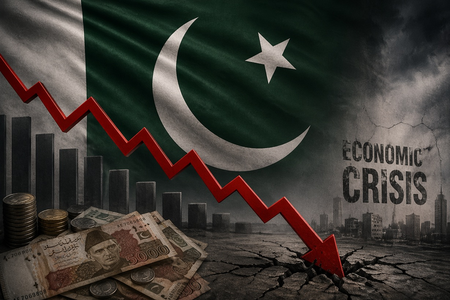
According to Thiemo Rickenstorf in ‘The Citizen’, Pakistan is facing one of its toughest economic crises in recent years. While relying on IMF bailout loans to stabilise its economy, foreign currency reserves in the nation have dipped to alarmingly low levels at various points.
Rickenstorf highlighted that the price of essential commodities is skyrocketing, and energy supply is still an issue in daily life. “The high cost of electricity, joblessness and the drop in buying power have led to a lot of frustration among millions,” he wrote.
With businesses shutting down, middle-class families cutting down costs and brain drain — life has been reduced to a struggle in the neighbouring country, he noted.
The article stressed that from Kashmir to Palestine, Afghanistan, or Islam-related issues in general, Pakistan’s political discourse has often revolved around the concept of “Muslim Ummah”.
However, Rickenstorf notes that in a majority of Muslim countries, the importance associated with Islam has been replaced with economic development, technological progress, infrastructure, and foreign investment. Countries such as Saudi Arabia, Turkey, Qatar and the United Arab Emirates have made themselves relevant economically and diplomatically.
“Pakistan has, however, been plagued with political instability, military supremacy in the political arena, weak institutions, and financial crises,” he noted.
Pakistan’s interest in becoming a negotiator in the West Asia conflict has a lot to do with its own interests. It understands that a prolonged conflict in the Middle East will result in a further surge in global oil prices, adversely affecting the already shaky economic scenario in Pakistan.
“Furthermore, Pakistan also has a considerable Shia population, which can also trigger sectarian tensions within Pakistan if the instability of Iran gets into Pakistan,” Rickenstorf said.
Islamabad’s efforts to strengthen its economy, enhance education, ensure democratic accountability, and safeguard the welfare of the common people would go a long way in resurrecting the nation’s image rather than attempting to emerge as an influential leader of the Muslim world, he contended.
–IANS
cg/vd