Over 44 pc rural homes in Kerala, Jharkhand without tap water supply: Jal Shakti Ministry

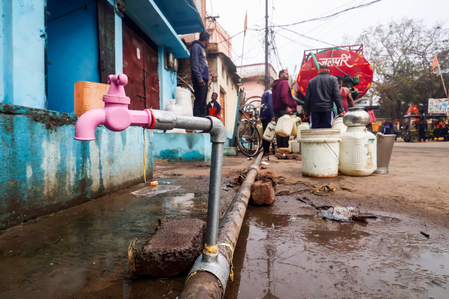
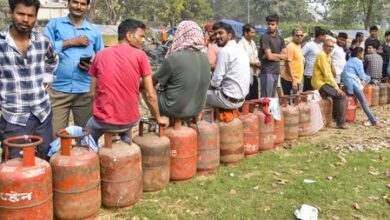
New Delhi, March 12 (IANS) As many as 3.54 crore (18.29 per cent) rural households are still without tap water supply, with Kerala and Jharkhand being the top two states with the highest percentage of (over 44 per cent) village homes waiting for the facility, the Lok Sabha was informed on Thursday.
Minister of State for Jal Shakti, V. Somanna, in a written reply, shared data indicating that in Kerala 45.12 per cent of rural households are without tap water supply and in Jharkhand 44.82 per cent households are still waiting for the facility.
In Kerala, 31.93 lakh rural households are still waiting for piped water supply while in Jharkhand 28.03 lakh village homes are without tap water.
The MoS said that 11 States/UTs have achieved 100 per cent coverage in terms of tap water supply to rural households under the Jal Jeevan Mission (JJM) – Har Ghar Jal launched in 2019.
These states include Gujarat, Haryana, Himachal Pradesh, Punjab, Rajasthan, Tripura, Nagaland, Goa, Dadra and Nagar Haveli and Daman and Diu, Arunachal Pradesh and Andaman and Nicobar Islands.
At the start of the Mission, only 3.23 crore (16.7 per cent) rural households were reported to have tap water connections. So far, as reported by States/UTs as on March 3, 2026, under Jal Jeevan Mission (JJM) – Har Ghar Jal more than 12.58 crore additional rural households have been provided tap water connections, said the MoS.
Thus, as on March 3, 2026, out of around 19.36 crore rural households in the country, around 15.82 crore (81.71 per cent) households are reported to have tap water supply in their homes and works for the remaining 3.54 crore households are at various stages of implementation in respective States, said Somanna.
Under JJM, as per the existing guidelines, Bureau of Indian Standards’ BIS:10500 standards are adopted as benchmark for quality of water being supplied through the piped water supply schemes.
As per the Operational Guidelines, States/ UTs can utilise up to 2 per cent of their annual allocation of funds under JJM for Water Quality Monitoring and Surveillance (WQM&S) activities, inter-alia, which includes setting up and strengthening of water quality testing laboratories, procurement of equipment, instruments, chemicals, glassware, consumables, hiring of skilled manpower, surveillance by community using field test kits (FTKs), awareness generation, educational programmes on water quality and accreditation/recognition of laboratories.
In consultation with various stakeholders, a ‘Concise Handbook for Monitoring Water Quality of Piped Drinking Water Supply to Rural Households’ was released in December 2024 for guidance to States/UTs, said the MoS
This handbook recommended for a comprehensive testing of drinking water samples at various testing points such as source (both surface and ground water), treatment plant, storage and distribution points, and remedial action wherever necessary, to ensure that the water supplied to households is of prescribed quality.
Under JJM, the Department undertakes assessment of the functionality of household tap water connections provided under the Mission, through an independent third-party agency, selected based on standard statistical sampling, the MoS said.
During the Functionality Assessment, 2024, it was found that 98.1 per cent of households in surveyed villages had tap connections; 87 per cent of households with tap connections reported receiving water in the past week, indicating overall progress; 84 per cent households receive water as per schedule; 80 per cent households were found receiving the minimum 55 LPCD water; 76 per cent households’ supply was found free from bacteriological contamination and 81 per cent of the supply source was found free from chemical contamination and considering the parameters of quantity, quality and regularity and 76 per cent of household tap connections were found to be functional, said the MoS.
–IANS
rch/rad