No effigy burning in this village in MP’s Vidisha where the King of Lanka is worshipped

Vidisha (Madhya Pradesh), Oct 19 (IANS) While Dussehra celebrations across the country traditionally culminate in the burning of Ravana’s effigies, a village in Madhya Pradesh’s Vidisha district observes the festival differently, worshipping the King of Lanka, affectionately known as ‘Ravan Baba’, as its presiding deity.
Speaking to IANS, Pandit Naresh Tiwari, the priest at the Ravan temple, said the villagers believed that Ravan Baba protected the community and that every auspicious occasion should begin with his blessings.
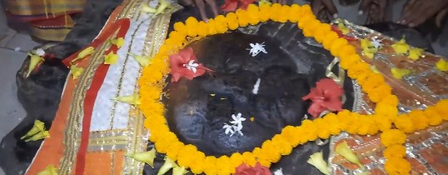
Located in Nateran tehsil of Vidisha, Ravan village is home to an ancient temple believed by locals to date back to the Parmar era. The temple houses a 12-foot idol of Ravana in a reclining posture, where daily prayers and aarti are performed. Rather than burning his effigy on Dussehra, villagers organise Ramayana recitations, devotional singing, and a grand community feast, drawing devotees from Vidisha, Bhopal and neighbouring areas.
“Our village, named Ravan, has an idol of Ravan Maharaj established. Ravan Baba Maharaj presides here, and our entire village resides under his protection. All our tasks are accomplished through him,” Tiwari said.
The priest added that villagers seek the deity’s blessings before weddings, pre-wedding rituals, Bhagwat Kirtans, and Ramayana recitations. According to him, failing to seek the deity’s blessings before beginning an auspicious undertaking is believed to invite obstacles.
The tradition extends to important personal milestones, including weddings and the purchase of new vehicles. Villagers offer the first wedding invitation to Ravan Baba and seek his blessings before proceeding with ceremonies.
Rajesh Dhakad, a representative of the village head, said local folklore explained the presence of Ravana’s idol through a story about a powerful demon who wanted to challenge Ravana. According to the legend, Ravan Baba came to the place and shattered the demon’s pride, which is why Ravan’s idol is depicted in a resting posture.
“The story of how the village got its name has been passed down through generations. There is no specific date, but ‘Ravan’ is an ancient name. Because the idol of Ravan Baba is here, the village is identified by his name,” Dhakad said.
He added that the annual Dussehra bhandara holds special significance for the community, with even villagers who have moved elsewhere making it a point to return for the occasion.
“Many people come with their wishes, and their wishes have been fulfilled here in the past. So, wherever they might be, they definitely come here on the day of Dussehra,” he said.
Pandit Govind Narayan Tiwari, a local resident, said Ravana was worshipped as a deity in the village and was given precedence during religious and family ceremonies.
“We worship Ravan Maharaj as a deity, and everyone else does too, because Ravan Maharaj is indeed a god. Here, Ravan Baba is worshipped first during every auspicious event,” he said.
He added that even wedding rituals begin with offerings to Ravan Baba, including the first offering of oil, before other ceremonies are performed.
The village’s distinctive Dussehra tradition reflects a local religious practice in which Ravana, commonly portrayed as the antagonist in the Ramayana and symbolically associated with the triumph of good over evil, is revered as a protector and village deity.
–IANS
sud/vd