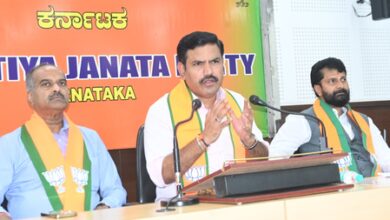
NHRC member flags social media firms’ non-compliance with SC order on reporting child abuse cases

New Delhi, Oct 15 (IANS) The National Human Rights Commission (NHRC) member Priyank Kanoongo on Thursday flagged continued non-compliance with a Supreme Court order directing social media intermediaries to report suspected offences under the Protection of Children from Sexual Offences (POCSO) Act to the local police, stating that the matter is being heard again by the apex court.
In a post on the social media platform ‘X’, Kanoongo said that compliance with the Supreme Court’s directions was still awaited despite the order having been passed in 2024. “This Hon’ble Supreme Court order was passed in 2024, yet compliance is still awaited. The matter is being heard again today,” he said.
Referring to the mandatory reporting provisions under the POCSO Act, Kanoongo said complaints of child sexual abuse must be reported to the local police, but claimed that social media companies were resisting compliance despite repeated directions from the Supreme Court.
“For years, the law has been caught in a cycle of delays while lakhs of children continue to wait for justice,” he said.
Kanoongo also questioned the legal representation being extended to social media companies in the proceedings, asking who would represent children who are unable to approach the court themselves or afford expensive lawyers.
He further raised concerns over the monetisation of online content, asking whether social media platforms were profiting from the traffic and advertising revenue generated when child sexual abuse material circulated on their services.
“Why are these companies resisting the reporting of child sexual abuse to the local police? Why is a clear legal mandate still awaiting implementation while children continue to suffer?” he asked.
The NHRC member’s remarks come against the backdrop of the apex human rights body’s ongoing interventions over allegations that Child Sexual Abuse Material (CSAM) was being circulated and promoted through advertisements on Meta-owned platforms, including Instagram.
The NHRC had taken suo motu cognisance of media reports by BBC World Service alleging that paid advertisements on Instagram used expressions such as “rape video” and “child video” and redirected users to Telegram channels where such material was allegedly being offered for sale.
On July 8, a Bench presided over by Priyank Kanoongo issued a notice to the Delhi Police Commissioner, directing a comprehensive investigation into the allegations, preservation of electronic evidence and examination of compliance with the mandatory reporting obligations under the POCSO Act.
The NHRC has also issued notices to the Ministry of Electronics and Information Technology (MeitY), police authorities in several states and Meta in connection with complaints concerning suspected child sexual abuse material on social media platforms.
The Supreme Court, in its judgment in Just Rights for Children Alliance & Another vs. S. Harish & Others, had clarified that compliance with the Information Technology Act, 2000, would not absolve intermediaries of their obligations under the POCSO Act.
Paragraph 258 of the judgment states that social media intermediaries are required to report the commission or likely commission of an offence under the POCSO Act not only to the National Center for Missing & Exploited Children (NCMEC) but also to the Special Juvenile Police Unit (SJPU) or the local police. The apex court observed that the POCSO Act and the rules framed under it have an overriding effect in this regard, and that intermediaries must comply with the statutory reporting requirements, particularly Section 20 of the Act and Rule 11 of the POCSO Rules.
–IANS
pds/dpb