
Munir’s plan to reshape Pakistan provinces raises fears of expanding military grip

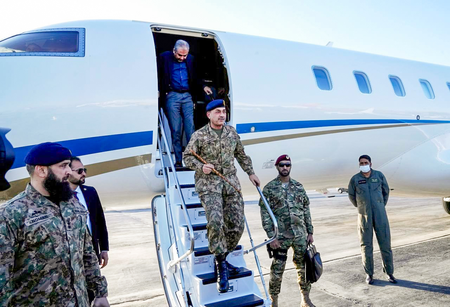
Kabul, Oct 21 (IANS) Pakistan Army chief Asim Munir is considering a sweeping restructuring of the country’s administrative map that could divide its four provinces into as many as 12 to 15 smaller provinces, raising concerns over provincial autonomy and the military’s expanding grip on civilian politics, a report has stated.
It noted that Munir’s growing role in political decision-making has underscored the military’s expanding influence, with civilian leaders facing mounting criticism for their inability to counter the armed forces.
“Pakistan’s four provinces, Punjab, Sindh, Khyber Pakhtunkhwa and Balochistan, have remained central to the country’s political structure since its creation in 1947. Punjab, the most populous province, is a stronghold of the Pakistan Muslim League-Nawaz (PML-N), while the Pakistan Peoples Party (PPP) has traditionally dominated Sindh. Critics say dividing these provinces could weaken the influence of both parties and reduce the provinces’ ability to act as counterweights to the federal centre,” a report in Afghanistan’s leading news agency, Khaama Press, detailed.
The report highlighted how Pakistan’s failure to address political grievances and its reliance on military repression culminated in Bangladesh’s independence in 1971, warning that questions over federal unity and military dominance have resurfaced.
“Pashtun-majority Khyber Pakhtunkhwa faces militant violence, security operations and public anger over insecurity. Unlike Bangladesh in 1971, separatism is not the province’s defining political demand. Balochistan’s insurgency stems from longstanding grievances over autonomy, resource control, enforced disappearances and military operations. Separatist groups seek independence, making tensions distinct from Khyber Pakhtunkhwa’s broader security crisis,” it mentioned.
Highlighting the growing challenges to provincial autonomy, the report cited the imposition of emergency rule in Khyber Pakhtunkhwa by Pakistani President Asif Ali Zardari on October 11, which suspended the provincial government led by jailed former Prime Minister Imran Khan’s Pakistan Tehreek-e-Insaf (PTI), following a recommendation from the federal cabinet.
While the federal government justified the move on security grounds, PTI representatives denounced it as illegitimate, further deepening tensions between Islamabad and the opposition-governed province, it added.
According to the report, the proposed restructuring faces major constitutional and political hurdles. It stated that redrawing provincial boundaries would require constitutional amendments and broad parliamentary backing, along with approval from the provincial assemblies concerned. Sindh has long opposed attempts to divide the province, the report said, making any broader reorganisation politically contentious.
“The debate has prompted wider questions about whether Pakistan is entering a period of deeper political instability. Some observers may draw comparisons with Bangladesh’s recent political upheaval, but the two countries have different political histories and circumstances. The comparison is therefore best understood as a warning about the possible consequences of weakened civilian institutions, rather than evidence that Pakistan is destined to experience the same outcome,” the report mentioned.
–IANS
scor/as