Jordan envoy welcomes US-Iran ceasefire, condemns Iran’s attacks on Gulf countries (IANS Interview)

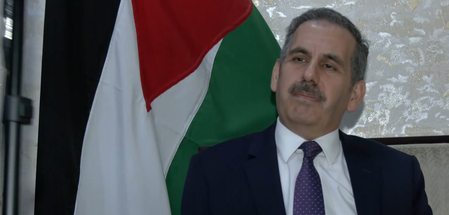
New Delhi, April 8 (IANS) Jordan’s Ambassador to India, Yousef Abdelghani on Wednesday welcomed the ceasefire agreement reached between the United States and Iran, noting that Jordan, from the very beginning, has been calling for a peaceful resolution of the conflict.
In an interview with IANS, Abdelghani condemned Iran’s targetting of Gulf countries, infrastructure, oil structure, oil fields and closing the Strait of Hormuz. He also mentioned about India-Iran ties, describing them as “solid, strong” and based on mutual interests and shared values.
Excerpts:
IANS: How do you view the current diplomatic relationship between Jordan and India?
Yousef Abdelghani: Our relations are very strong, solid, based on mutual interest and shared values. Last year, we celebrated the 75th anniversary of establishing diplomatic ties between Jordan and India.
IANS: What new initiatives are being planned to strengthen trade ties between India and Jordan?
Yousef Abdelghani: During Prime Minister Modi’s last visit to Jordan, we agreed to strengthen bilateral trade between the two countries from the current level, around three billion US dollars, to almost five billion US dollars. We also agreed to look for new avenues of cooperation in different fields between Jordan and India.
IANS: How significant is the cooperation between India and Jordan amid current geopolitical situation in the Middle East?
Yousef Abdelghani: It is very important, given the fact that Jordan is part of the IMEC trade route between India and Europe. So, we are keen to have stability in the region and the stability will bring prosperity for all the countries, including Jordan and India.
IANS: How do you see the ongoing tension involving US and Iran, including temporary ceasefire and upcoming peace talks?
Yousef Abdelghani: Jordan has been from the beginning promoting peace and calling for peaceful resolution of conflicts. We are not part of these hostilities and we call for peace in the region and are happy to hear that a ceasefire is accomplished. We are hoping that this ceasefire sustains.
IANS: How has the disruption of Strait of Hormuz impacted global stability and trade?
Yousef Abdelghani: It is impacting. We witnessed that before in Bab al-Mandeb and Red Sea…I think all countries in the region and the whole world should support that these straits are open for trade and any obstacles put to this will affect not just the country of the region but the whole world as we’ve seen. Every country has been hit because of the closure of the Strait of Hormuz. So, I think global cooperation should be there to enable these straits to be open all the time.
IANS: Do you think the conflict in West Asia is primarily about oil and gas or about geopolitical influence and demonstrating power at global stage?
Yousef Abdelghani: We have been hearing lots of things about the tensions in the region. But, Jordan has called for peace to prevail. One of the main pillars of our foreign policy, as His Majesty the King stated, is to promote peace in the region and beyond. So, whatever are the tensions or intentions of certain countries in the region to gain domination or change the map of the Middle East, we don’t approve that and we don’t think that this could be done. We don’t support any kind of hostilities or any kind of attempts to change the status quo in the region. We witnessed that before in Iraq, when the war, first war in Iraq happened, Jordan was not part of that and we were sanctioned because we did not allow any country to use our soil or airspace as a launchpad against Iraq. History proved that we were right because what happened after destruction of Iraq and dissolving the Iraqi army was that the country went into chaos, the ISIS and other terrorists factions emerged. We don’t want this to be repeated in the region. We want wisdom and peace to prevail.
IANS: How do you see the current situation in West Asia and its long-term implications?
Yousef Abdelghani: First of all, we condemn what Iran has been doing. Iran has been targetting the Gulf countries, the infrastructure, oil structure, oil fields and closing the Strait of Hormuz… This we condemn and also Iran targetting our infrastructure in Jordan. We, from the very beginning, declared that Jordan is not part of these hostilities. Jordan will not allow any country to use its military bases or its soil or air space to target any other country. So, we informed the Iranians from the beginning about this but unfortunately they have their own tensions and their own views and we also made it known for everyone that we don’t have foreign bases in our country and our air bases are run and controlled by Jordan First Army and we don’t have any kind of foreign troops in our country. As was lately stated by the Deputy Prime Minister, Minister of Foreign Affairs of Jordan, we have foreign consultants that do three tasks – helping us combat terrorism, drug trafficking and smuggling of weapons.
During the Syrian civil war and during the emergence of ISIS, we were at the forefront of fighting terrorism on behalf of the whole world. So, the whole world should thank us for what we were doing and you remember the only base that was close to our border was a Al-Tanf base in the Syrian border and we used to provide, there is a refugee camp there, and we used to provide logistics for refugee camps. Jordan took a heavy burden because of these conflicts. I can prescribe my country as an oasis of peace amid inflamed ocean. So, conflicts have been surrounding us, but we’ve been peaceful all the time. But, the consequences of these conflicts affected us because we observed refugees from everywhere. From Palestine, we received in 1948, 1967, from the Iraqi civil war we received refugees more than a million. And from Syria also, we received more than a million and half. Many of them are still in our country. So, Jordan is there to help and to aid peace and to mitigate for peace and for promote peace in the region and beyond and we are helping the whole world in this manner, combating terrorism, drug trafficking, weapons trafficking. All these are being done by our country and the whole world should thank us for this.
IANS: Do you believe in Iran’s statement that it is not having a nuclear bomb?
Yousef Abdelghani: We in the Middle East and I think Iran is part of non-proliferation treaty and our policy is that we are against obtaining nuclear weapons in the region… We want the Middle East to be clear of nuclear weapons and this should be applied to all countries, including Israel.
IANS: Do you think peace is possible between Iran, US and Israel or will this conflict continue?
Yousef Abdelghani: No, we believe wisdom should prevail and war brings more wars… Because we are in the region, we witnessed that… What happened in one country will affect the other countries. Look what has happened… During this war, all Gulf countries were affected, their infrastructure were targetted. Why are you targetting infrastructure? Why are you targetting houses, government offices, oil field production, oil wells, ports? All this has affected the whole world. So, war is not the answer. The answer is peace and negotiations and war brings about agony, suffering to all people in the region. For that reason, we are asking also to solve the main issue in our region, which is the Palestinian issue or Palestinian-Israeli conflict. This conflict is the main conflict in our region. If this conflict is not resolved, if the international community will not help us to resolve this conflict, the cycle of violence will continue. Many factions or organisations will use Palestinian issue as an excuse to have violence or provoke violence in our region. So, the main issue in our region that should be resolved is the Palestinian issue. It’s for Israel to give the Palestinians their rights and freedom and on their land, occupied land, 1967 land, and to establish their state and to have self-determination. Otherwise, if this conflict is not resolved, the cycle of violence will continue.
IANS: How does Jordan view Iran’s targetting of gulf countries because apparently they allowed the US to use their bases?
Yousef Abdelghani: They denied that. They said we don’t allow United States to use our military bases to target Iran. But, still Iran will target them and it is not okay. They are not only targetting military bases but also civilian infrastructure like oil fields. So, this has to be condemned. This is not acceptable. We are keen to have a very strong and solid relations with Iranians. The Iranians are our brothers, and we are in the region for centuries. We have been living in peace and harmony. So, this is not acceptable… for them to target us because we have no bad intentions towards Iran or we want regime change or ask for regime change or ask for anything. We don’t support that, but we expect the Iranians to support our sovereignty and territorial integrity and not to target our infrastructure.
IANS: Are Jordan’s senior leaders planning to visit India in the near future?
Yousef Abdelghani: Of course! Last February, Her Majesty Queen Rania visited India. It was a high-level visit. I think that exchange visit is one of the things that has been agreed upon during the visit of Prime Minister Modi to Jordan and the relations between his majesty and Prime Minister Modi are very strong and solid. They do exchange regular phone calls and interactions and the last two phone calls were made by Prime Minister Modi to show solidarity with Jordan during the incidents of targetting of our infrastructure. We also have an Indian diaspora in Jordan, more than 20,000 Indians live, we are taking good care of them in Jordan. Jordan is very important to India because we help support food security with fertilizers, with phosphoric acid, with phosphate, raw phosphate and raw potash. This also supports food security and industrial food industry here in India. So, we are keen to have strong, solid relations. We are keen to exchange regular visits. We are keen to have more development in our relations in the future.
–IANS
akl/as