Japan’s ruling bloc pushes fiscal 2026 budget through lower house amid criticism

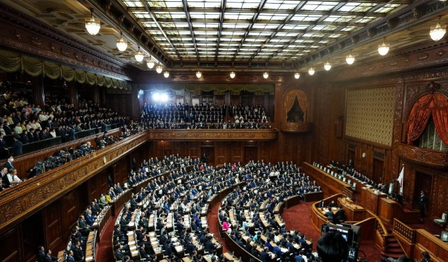
Tokyo, March 14 (IANS) A record initial state budget for fiscal 2026 was approved by Japan’s lower house with the backing of the ruling coalition’s supermajority, amid criticism that the bill was pressed ahead despite controversies surrounding its contents and unusually shortened deliberations.
The total size of the draft budget exceeds 122.31 trillion yen (about 769 billion US dollars), marking a record high, with the defence budget also setting a new record of over 9 trillion yen for the first time. The proposal has sparked ongoing debate in Japan since the government unveiled the draft late last year.
However, local media pointed out that the deliberation time for the budget bill in the House of Representatives was significantly shortened to about 59 hours, the shortest since 2000.
Opposition forces have criticised the ruling Liberal Democratic Party (LDP) for pushing forward the controversial budget by leveraging its parliamentary majority. Junya Ogawa, leader of the opposition Centrist Reform Alliance, said the LDP’s series of forceful parliamentary manoeuvres was “highly abnormal” and reflected Prime Minister Sanae Takaichi’s “arrogance.”
Yuichiro Tamaki, head of the Democratic Party for the People, noted that the fiscal 2026 budget has reached a record scale and should have been thoroughly debated by elected lawmakers regarding how public funds are allocated, noting that the deliberation process this time “has serious problems.”
Tomoko Tamura, chair of the Japanese Communist Party, described the ruling party’s approach as “power politics.”
With the passage, the parliamentary battle moves to the House of Councillors from Monday, where the ruling bloc of the LDP and the Japan Innovation Party does not have a majority.
Kyodo News said that parliamentary deliberations on the national budget should serve as an important process in which the government and both ruling and opposition parties examine fiscal spending through questioning and debate, seeking a more reasonable allocation of public funds amid differing views.
It is also an important window through which the public can understand the government’s policy direction, and the government has a responsibility to ensure thorough and careful deliberation, the report said.
–IANS
sd/